12 Volt PV Panels: The Complete Guide for Reliable Battery Charging and Off-Grid Power
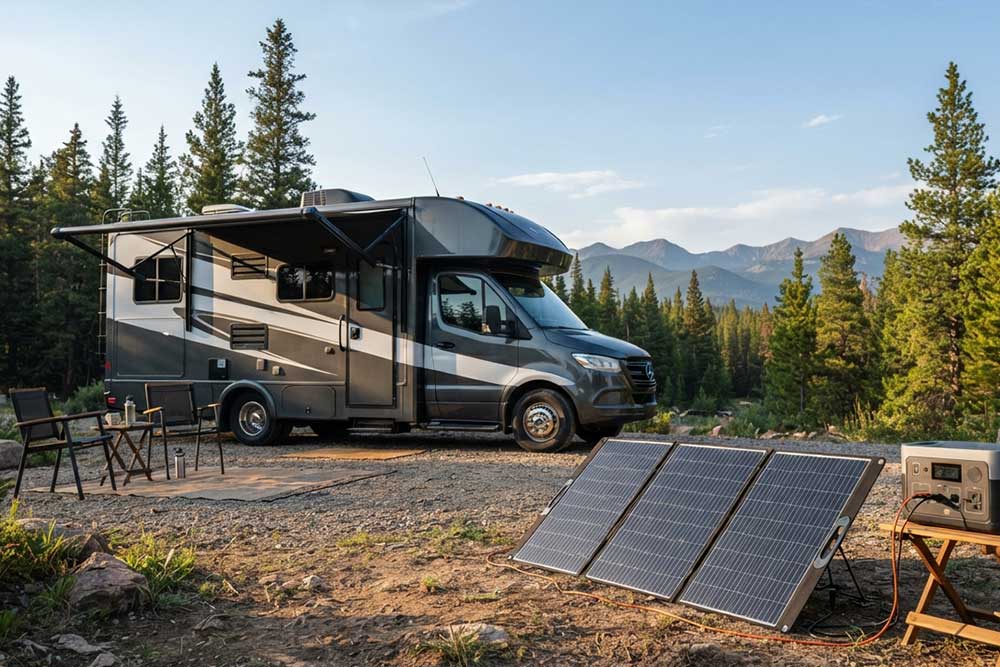
12 volt PV panels remain one of the most practical solar solutions for charging batteries, powering RVs, boats, cabins, and remote equipment. When properly sized and installed, a quality 12V solar system can provide dependable power for years with minimal maintenance.
I learned this lesson years ago while troubleshooting a remote monitoring station that repeatedly lost power every winter.
The equipment itself wasn’t the problem.
Neither was the battery.
The real issue was a poorly matched solar panel.
The site used a small panel selected from a catalog without calculating actual winter solar production. During summer it appeared to work perfectly. By December, battery voltage dropped below operational thresholds almost every week.
Since then, I’ve worked with dozens of solar installations ranging from mobile homes and RVs to marine applications and agricultural monitoring systems. The same pattern appears repeatedly:
The performance of a solar system depends less on advertised wattage and more on choosing the correct 12 volt PV panels for the environment, battery bank, and daily energy consumption.
Author Experience & Industry Background
This article was reviewed by the Bright Solar engineering team, whose experience includes flexible solar panel manufacturing, off-grid energy systems, RV installations, marine solar applications, and OEM solar projects supplied to customers across North America, Europe, and Australia.
The insights below combine field experience with publicly available research from:
- U.S. Department of Energy (DOE)
- National Renewable Energy Laboratory (NREL)
- Solar Energy Industries Association (SEIA)
- International Energy Agency (IEA)
Rather than repeating generic specifications, this guide focuses on what actually matters when selecting and using 12 volt PV panels.
What Are 12 Volt PV Panels?
Despite the name, a 12 volt PV panel does not actually produce exactly 12 volts.
This surprises many first-time buyers.
A typical panel marketed as a “12V solar panel” usually produces:
| Parameter | Typical Value |
|---|---|
| Nominal Voltage | 12V |
| Operating Voltage (Vmp) | 17V–19V |
| Open Circuit Voltage (Voc) | 21V–24V |
| Operating Current | Depends on wattage |
The higher operating voltage is intentional.
Charging a 12V battery requires voltage greater than battery voltage itself.
For example:
- Fully charged AGM battery: ~12.8V
- Charging voltage: 13.8V–14.7V
- Solar panel output required: significantly higher
Without this voltage margin, charging would stop.
Why 12 Volt PV Panels Remain Popular
The solar industry has moved aggressively toward higher-voltage residential systems.
Yet 12V remains dominant in mobile and off-grid applications.
Why?
Because many devices are already designed around 12V DC power.
Common examples include:
- RV electrical systems
- Camper vans
- Marine electronics
- Agricultural fencing
- Security cameras
- Remote monitoring stations
- Cabin lighting
- Portable refrigerators
In many situations, running equipment directly from DC power avoids inverter losses.
That matters more than many people realize.
According to the U.S. Department of Energy, inverter efficiency typically ranges from 90–96%.
Even efficient systems lose energy during conversion.
For smaller installations, keeping loads on DC often improves overall system efficiency.
Common Wattages Available for 12 Volt PV Panels
One mistake buyers make is focusing exclusively on voltage.
Wattage determines actual energy production.
10W–30W Panels
Typically used for:
- Battery maintenance
- Gate openers
- Security cameras
- Remote sensors
These panels rarely power active loads continuously.
Instead, they maintain battery charge.
50W–100W Panels
Common applications:
- Small RV systems
- Fish finders
- Marine electronics
- Portable power stations
These represent the entry point for practical energy generation.
150W–200W Panels
Popular among:
- Camper owners
- Weekend cabins
- Van conversions
This range often provides enough energy for lighting, charging electronics, fans, and water pumps.
300W+ Systems
Most users achieve this by combining multiple panels.
Applications include:
- Full-time RV living
- Off-grid cabins
- Mobile offices
- Marine cruising vessels
Real-World Energy Production of 12 Volt PV Panels
Manufacturer specifications rarely reflect actual operating conditions.
Field performance depends on:
- Sun angle
- Ambient temperature
- Cloud cover
- Cable losses
- Controller efficiency
- Shading
NREL research consistently shows that real-world solar production averages approximately 75–85% of rated output over time.
Consider a 200W solar panel.
Theoretical production:
200W × 5 sun hours = 1,000Wh/day
Realistic production:
Approximately 750–850Wh/day
This distinction matters when sizing batteries.
I once visited an RV owner who believed his 200W system should generate “200 watts all day.”
His expectations came directly from marketing materials.
The actual system was functioning normally.
The assumptions were not.
How to Size 12 Volt PV Panels Correctly
Sizing starts with consumption.
Not panel size.
Step 1: Calculate Daily Energy Usage
Example RV loads:
| Device | Watts | Hours | Daily Consumption |
|---|---|---|---|
| LED Lights | 30W | 5h | 150Wh |
| Vent Fan | 40W | 6h | 240Wh |
| Laptop | 60W | 4h | 240Wh |
| Refrigerator | 500Wh/day | – | 500Wh |
Total:
1,130Wh/day
Step 2: Determine Solar Production
Assume:
5 peak sun hours
Required panel size:
1,130 ÷ 5 = 226W
Accounting for losses:
1,130 ÷ 0.8 = 1,412Wh
1,412 ÷ 5 = 282W
Practical recommendation:
300W of 12 volt PV panels
Step 3: Match Battery Storage
For one day of autonomy:
1,130Wh ÷ 12V
≈94Ah
Adding reserve capacity:
Recommended battery:
120–150Ah
Flexible vs Rigid 12 Volt PV Panels
This is a discussion I have frequently with RV owners.
There is no universal winner.
Only application-specific choices.
| Feature | Flexible Panels | Rigid Panels |
|---|---|---|
| Weight | Excellent | Moderate |
| Roof Loading | Very Low | Higher |
| Curved Surfaces | Excellent | Poor |
| Installation Speed | Fast | Moderate |
| Cooling Airflow | Lower | Better |
| Impact Resistance | Good | Excellent |
For mobile applications, weight often becomes the deciding factor.
This is one reason demand for flexible solar technology has grown steadily in recent years.

Why Battery Charging Efficiency Matters More Than Panel Wattage
Many solar articles stop at wattage.
Real systems do not.
Two identical 200W systems can perform very differently.
Reasons include:
- MPPT vs PWM controller
- Cable sizing
- Battery chemistry
- Panel orientation
A properly configured MPPT controller may improve harvest by 15–30% compared to older PWM systems under certain conditions.
That increase often exceeds the performance difference between competing solar panels.
Best Applications for 12 Volt PV Panels
Certain environments consistently benefit from 12V architecture.
RV and Camper Systems
The majority of RV appliances already operate on 12V DC.
Solar integrates naturally.
Marine Installations
Boats commonly use 12V electrical systems.
Solar provides quiet charging without running generators.
Remote Monitoring
Telecommunications, environmental sensors, and agricultural monitoring systems frequently rely on 12V battery banks.
Cabin Power
Small cabins often start with simple 12V systems before upgrading to larger off-grid configurations.
Real Customer Case Study — How a Small Cabin Solved Its Battery Problems with 12 Volt PV Panels
A few years ago, a customer from northern Minnesota contacted Bright Solar regarding a recurring power issue at his fishing cabin.
The cabin wasn’t large.
No air conditioning.
No electric heating.
No major appliances beyond:
- LED lighting
- Water pump
- Small DC refrigerator
- Phone charging
- Weather monitoring equipment
On paper, the energy demand appeared modest.
Yet batteries kept failing.
The owner initially blamed battery quality. He had already replaced two AGM battery banks within four years.
When we reviewed the system, the problem became obvious.
The cabin used a single 100W panel installed nearly flat on the roof.
During summer, it performed adequately.
During late autumn and winter, production collapsed.
The solution was surprisingly simple:
- Upgrade to 300W of 12 volt PV panels
- Install MPPT charge controller
- Improve cable sizing
- Adjust mounting angle
Six months later:
| Metric | Before Upgrade | After Upgrade |
|---|---|---|
| Average Winter Battery Voltage | 11.9V | 12.7V |
| Generator Runtime | Weekly | Rarely Needed |
| Battery Life Expectancy | Reduced | Normal |
| Daily Solar Production | ~300Wh | ~1,100Wh |
The lesson wasn’t about panel technology.
It was about system design.
Most solar failures originate from undersized systems rather than defective equipment.
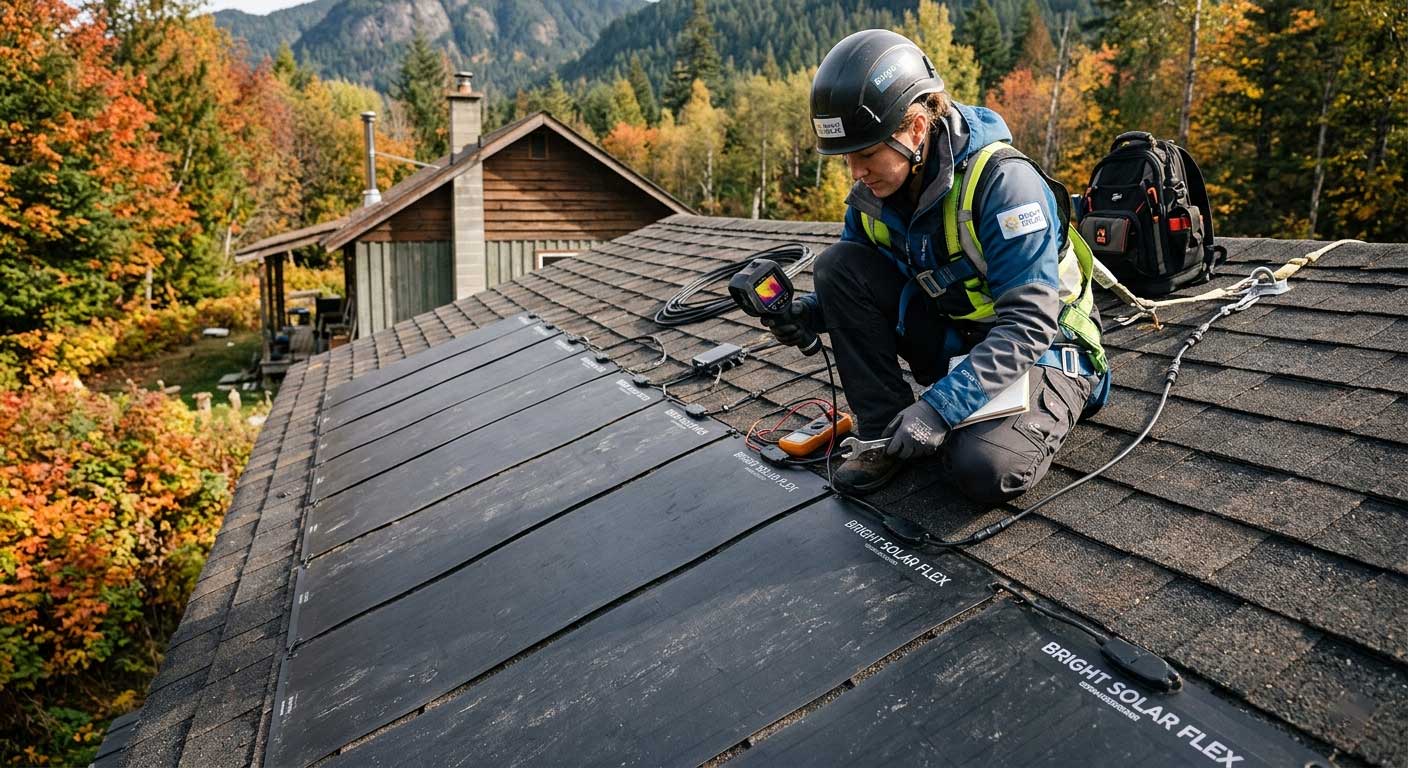
How to Install 12 Volt PV Panels Properly
One thing I learned after inspecting dozens of RV and marine installations is that installation quality often determines long-term performance more than panel brand.
The process itself is straightforward.
Attention to detail is not.
Step 1 — Choose the Correct Location
Look for areas with:
- Maximum sunlight exposure
- Minimal shading
- Good airflow
- Strong mounting surface
Avoid locations near:
- Air conditioning units
- Roof vents
- Satellite antennas
- Trees that create afternoon shadows
Even partial shading can significantly reduce production.
According to NREL studies, shading on a single cell can reduce output disproportionately depending on panel architecture and bypass diode configuration.
Step 2 — Mount the Panels Securely
For flexible panels:
- Clean mounting surface thoroughly
- Use approved adhesive systems
- Follow manufacturer curing guidelines
- Leave drainage paths
For rigid panels:
- Install corrosion-resistant brackets
- Maintain ventilation gap
- Use stainless hardware in marine environments
A surprising number of failures originate from poor mounting rather than electrical issues.
Step 3 — Connect to a Charge Controller
The basic flow is:
Solar Panel → Charge Controller → Battery → Loads
Never connect solar panels directly to batteries without appropriate regulation.
The controller protects batteries from:
- Overcharging
- Excessive discharge
- Voltage fluctuations
For systems larger than approximately 150W, MPPT controllers generally provide superior performance.
Step 4 — Verify Charging Performance
Check:
- Panel voltage
- Battery voltage
- Charging current
- Controller status
A multimeter remains one of the most valuable diagnostic tools in any solar installation.
Why MPPT Controllers Have Changed Small Solar Systems
Ten years ago many small systems relied on inexpensive PWM controllers.
Today, MPPT technology has become the standard recommendation.
The reason is simple.
More energy reaches the battery.
Typical comparison:
| Feature | PWM | MPPT |
|---|---|---|
| Cost | Lower | Higher |
| Efficiency | Moderate | Higher |
| Cold Weather Performance | Limited | Excellent |
| Large Arrays | Less Suitable | Ideal |
| Energy Harvest | Lower | Higher |
According to multiple field studies and manufacturer performance testing, MPPT controllers often improve energy harvest by 15–30% depending on operating conditions.
That improvement becomes particularly valuable in winter.
Common Mistakes People Make with 12 Volt PV Panels
After years of reviewing installations, certain mistakes appear repeatedly.
Mistake #1: Buying Based Only on Wattage
A 200W panel connected to poor wiring may underperform a properly installed 150W system.
System design matters.
Mistake #2: Ignoring Seasonal Differences
Summer sunlight hides many design flaws.
Winter reveals them.
When sizing systems, always consider worst-case production periods.
Mistake #3: Underestimating Battery Capacity
Solar generation and storage must work together.
Adding more panels cannot compensate for severely undersized batteries.
Mistake #4: Mixing Different Panels
Combining panels with different:
- Voltages
- Currents
- Ages
- Technologies
can reduce overall system efficiency.
Uniform arrays generally perform better.
Mistake #5: Neglecting Maintenance
Solar panels require little maintenance.
Not zero maintenance.
Dust, leaves, bird droppings, and salt buildup can gradually reduce performance.
How Long Do 12 Volt PV Panels Last?
One of the most encouraging trends in solar has been durability.
Modern solar panels often continue producing electricity long after their warranty period.
Industry expectations commonly include:
| Component | Expected Service Life |
|---|---|
| Solar Panels | 25–30+ Years |
| MPPT Controller | 10–15 Years |
| AGM Batteries | 3–7 Years |
| LiFePO4 Batteries | 10–20 Years |
| Cabling | 20+ Years |
The International Energy Agency (IEA) and NREL both report continuous improvements in panel degradation rates over the past decade.
Many modern modules degrade less than 0.5% annually.
Cost Analysis of a Typical 12 Volt PV Panel System
The question customers ask most often is straightforward:
“How much will it cost?”
The answer depends on energy requirements.
Typical examples:
| System Size | Estimated Cost Range |
|---|---|
| 100W | $150–$400 |
| 200W | $300–$700 |
| 300W | $500–$1,200 |
| 600W | $1,000–$2,500 |
| 1000W | $2,000–$5,000+ |
Costs vary based on:
- Battery chemistry
- Controller type
- Installation complexity
- Mounting structure
- Labor rates
The cheapest system rarely becomes the lowest-cost system over its lifetime.
Reliability usually saves more money than bargain pricing.
FAQ About 12 Volt PV Panels
Can 12 volt PV panels charge lithium batteries?
Yes.
Most modern MPPT controllers support LiFePO4 charging profiles.
Always verify compatibility before installation.
Are flexible panels suitable for permanent installations?
Yes.
High-quality ETFE-coated flexible panels are widely used on RVs, boats, cabins, and mobile structures.
Proper installation remains essential.
How many 12 volt PV panels do I need?
The answer depends entirely on daily energy consumption.
Calculate loads first.
Then size solar generation accordingly.
Do 12 volt PV panels work on cloudy days?
Yes.
Output decreases, but panels continue producing electricity under diffuse sunlight.
Production levels depend on cloud density and weather conditions.
Is a charge controller always required?
In nearly all practical systems, yes.
Controllers protect batteries and optimize charging performance.
What is better for RVs: flexible or rigid panels?
For many RV owners, flexible panels offer advantages in:
- Weight reduction
- Easier installation
- Lower roof stress
- Curved surface compatibility
The best choice depends on vehicle design and travel style.
Visit the product page:Flexible Solar Panel
Final Thoughts on Choosing 12 Volt PV Panels
After spending years around off-grid cabins, RV rooftops, boats, remote monitoring stations, and countless customer projects, one observation continues to hold true:
The most successful solar systems are rarely the most expensive.
They are simply well-matched to the job.
A properly designed set of 12 volt PV panels can quietly provide dependable energy for decades, whether charging batteries at a remote fishing cabin, supporting life on the road in an RV, or powering equipment miles away from the nearest utility line.
For users seeking lightweight installation, dependable charging performance, and long-term durability, modern flexible solutions from Bright Solar offer an efficient path toward reliable off-grid power.
Related recommendations
-

Foldable Portable Solar Panels: A Practical Guide to Mobile Power
10Foldable portable solar panels provide mobile electricity and can be repositioned toward better sunlight without permanent installation.
View details -
Solar Panel for AC: How Many Solar Panels Are Needed to Run an Air Conditioner?
209Discover how a solar panel for ac systems works, how many panels are required, and how Bright Solar solutions reduce cooling costs for homes, RVs, and off-grid applications.
View details -
Camper Flexible Solar Panels: Lightweight Solar Power Solution for RV Travel
107Camper flexible solar panels provide lightweight, low-profile solar power for RVs, camper vans, and mobile off-grid applications.
View details -
Flexible solar panel 300w: Lightweight Solar Solution for Mobile and Home Applications
175Explore flexible solar panel 300w solutions from Bright Solar. Learn power output, installation methods, real applications, durability, and how 300W flexible solar panels support modern energy needs.
View details