How to Clean Portable Solar Panels?
Direct Answer :
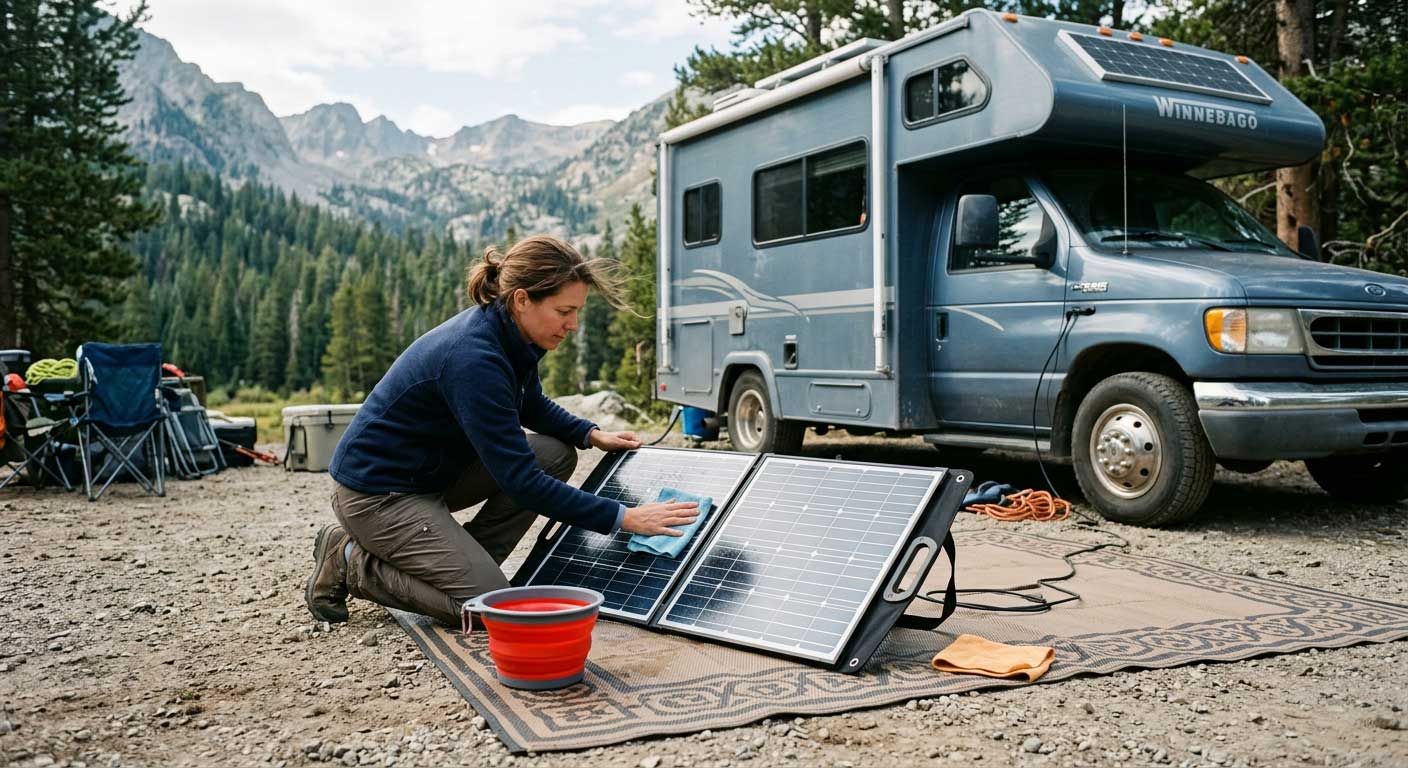
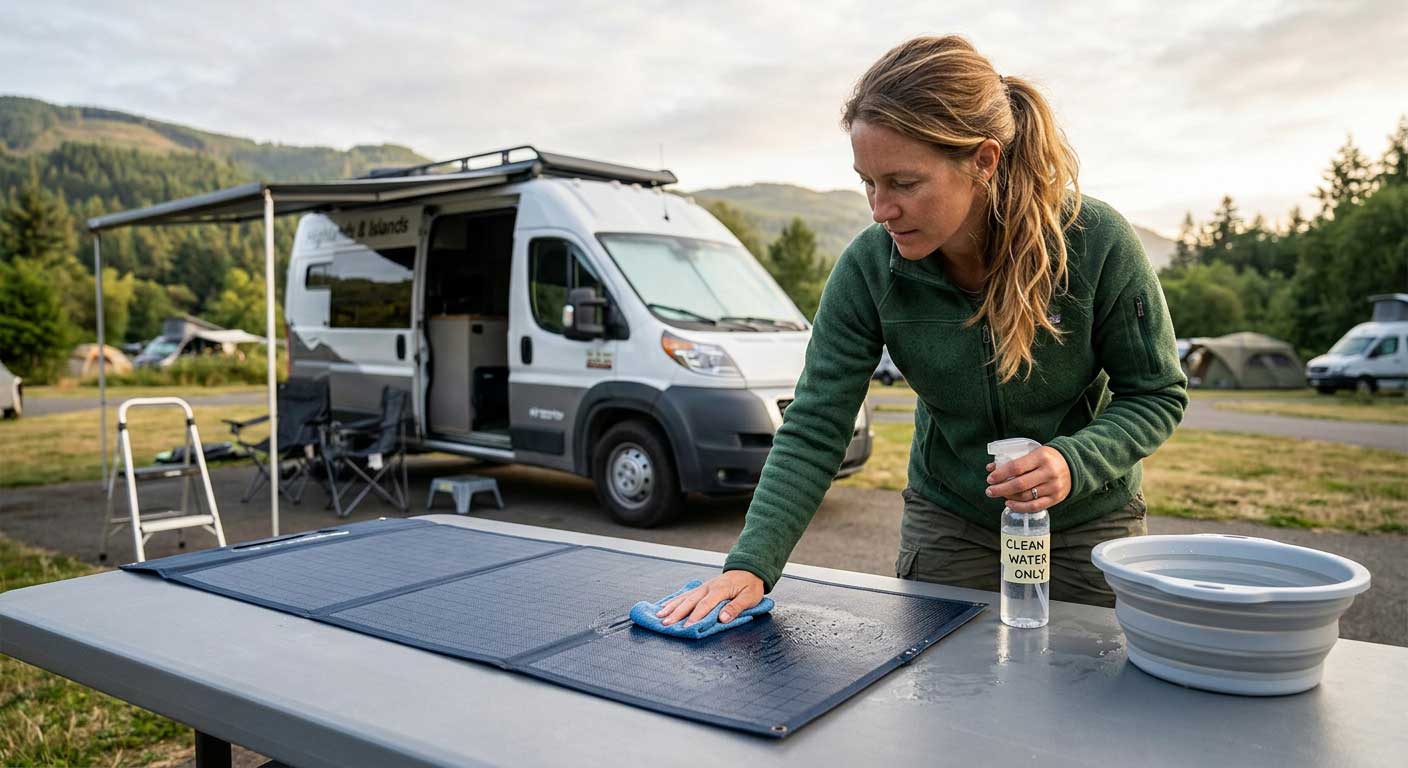
To clean portable solar panels, first disconnect them from electrical equipment and let the surface cool. Remove loose dust with a soft brush, then gently wash the panel with clean water and a soft, non-abrasive cloth. Avoid harsh chemicals, abrasive pads, and aggressive scrubbing that can damage protective surfaces.
Portable solar panels collect more than ordinary dust. On camping trips, we see pollen, fine sand, fingerprints, bird residue, and dried water spots build up around the surface and edges. That matters because anything sitting between sunlight and the photovoltaic cells reduces the light reaching the module.
At Bright Solar, our experience with portable and flexible solar applications has made one point clear: cleaning technique matters as much as cleaning frequency. Scrubbing a dry, sandy panel may remove dirt quickly, but it can also drag abrasive particles across the surface.
NREL research has documented annual PV energy losses from soiling of up to 7% in parts of the United States, with much higher losses reported in heavily affected regions worldwide.
Why Portable Solar Panels Need Cleaning
Portable panels are often used close to the ground, where they encounter considerably more contamination than a high rooftop array.
Typical contaminants include:
- Dust and sand
- Pollen
- Leaves and small debris
- Bird droppings
- Mud
- Water spots
- Fingerprints and oily residue
NREL’s research is particularly useful here because it shows that rain should not automatically be treated as a complete cleaning solution. In a 2023 study of five utility-scale solar plants in North Carolina, pollen reduced panel performance by as much as 15% during peak pollen season. The researchers also found that manual cleaning increased measured performance by 5%–11% at the studied sites.
Portable panels have different dimensions and operating conditions, but the underlying issue is the same: dirty surfaces transmit less useful sunlight to the cells.
What You Need to Clean a Portable Solar Panel
You do not need an elaborate cleaning kit.
| Cleaning Item | Recommended Use |
|---|---|
| Clean water | Rinsing loose dirt |
| Soft microfiber cloth | Gentle surface cleaning |
| Soft-bristle brush | Removing loose dust |
| Clean sponge | Light wet cleaning |
| Mild cleaning solution | Only when manufacturer permits |
| Dry microfiber cloth | Removing excess water |
The safest starting point is the manufacturer’s own cleaning instructions. Surface coatings differ, particularly between glass rigid modules and lightweight flexible panels.
For Bright Solar portable or flexible products, avoid assuming that a household glass cleaner is appropriate simply because the surface looks like glass.
How to Clean Portable Solar Panels Step by Step
Step 1 — Disconnect the Panel and Let It Cool
Disconnect the portable solar panel from the power station, battery, or other equipment before cleaning.
If the panel has been sitting under strong midday sunlight, allow it to cool first.
A cool surface is easier to clean without rapid water evaporation leaving mineral spots behind.
Step 2 — Remove Loose Dust First
Do not immediately rub a dusty panel with a dry cloth.
Instead, gently remove loose particles with:
- A soft brush
- Clean water
- A gentle air stream where appropriate
This small step is easy to skip. It is also where unnecessary surface abrasion can begin.
NREL research specifically recommends soft, thin-bristle brushes when contact cleaning is necessary and recommends cleaning under low- or no-light conditions.
Step 3 — Rinse With Clean Water
Use clean water to loosen remaining dust and dirt.
For mineral-heavy water, distilled or deionized water can help reduce mineral deposits. NREL’s research recommendations include using deionized water near the module’s temperature for washing.
Do not use a high-pressure washer directly against a portable panel.
Step 4 — Wipe Gently
Use a clean, soft microfiber cloth or suitable sponge.
Work gently across the surface rather than pressing hard on stubborn marks.
If bird droppings or dried mud have hardened, wet the area and allow it to soften before wiping. Do not attack the spot with a dry scraper.
Step 5 — Remove Remaining Water
After cleaning, allow the panel to drain or gently wipe away excess water.
Pay particular attention to:
- Connectors
- Cable entry points
- Junction boxes
- Panel edges
Do not reconnect electrical equipment until connections are dry and secure.
How Often Should You Clean Portable Solar Panels?
There is no universal cleaning schedule.
A panel used once a month in a rainy region does not need the same maintenance as a panel used every day in a dusty desert environment.
Consider cleaning when:
- Dust is visibly covering the surface
- Pollen forms a noticeable film
- Bird droppings block part of the panel
- Output falls unexpectedly
- Mud or dried water spots remain after rain
NREL maintains a U.S. PV Module Soiling Map covering soiling parameters from 124 locations, demonstrating how strongly contamination patterns vary by location.
For portable solar users, this supports a simple field rule: inspect the panel rather than blindly cleaning it on a fixed calendar.
What Not to Use When Cleaning Portable Solar Panels
Knowing how to clean portable solar panels also means knowing what can damage them.
Portable panels are handled more frequently than fixed rooftop modules. They are folded, transported, placed on the ground, packed into vehicles, and exposed to changing weather. A cleaning method that seems harmless in a garage can become a problem after repeated use.
Avoid:
- Abrasive sponges
- Steel wool
- Rough brushes
- Razor blades
- Aggressive scraping
- Strong solvents
- Unapproved household cleaners
- High-pressure washing
The objective is to remove contamination, not polish the panel.
For stubborn bird droppings, soak the area first. Give the water time to soften the residue. Then wipe it away with a soft cloth. This is much safer than repeatedly rubbing a dry deposit across the surface.
Cleaning Portable Solar Panels in Different Outdoor Conditions
Desert and Sandy Environments
Fine sand is particularly troublesome because dry particles can act as an abrasive.
If you camp in a desert environment:
- Brush or rinse loose sand away.
- Avoid dry wiping.
- Use clean water to loosen remaining particles.
- Finish with a soft microfiber cloth.
Do not place the panel face-down on sand while packing it.
A few seconds of careless handling can leave scratches that repeated cleaning makes worse.
Coastal and Marine Environments
Salt deposits can accumulate on panels used near the ocean.
For marine applications:
- Rinse salt residue with fresh water.
- Pay attention to panel edges and connectors.
- Do not allow salt deposits to remain for extended periods.
- Inspect electrical connections during routine maintenance.
Bright Solar’s flexible solar panels applications include marine environments where moisture and salt exposure need to be considered during both product selection and maintenance.
Camping and Forest Environments
Portable solar panels used around forests may collect pollen, leaves, insects, and tree residue.
Pollen deserves particular attention. As noted by NREL, research at five North Carolina solar plants found that pollen-related soiling could reduce performance by up to 15% during peak pollen season. Manual cleaning recovered 5%–11% of measured performance at those sites. (nrel.gov)
That does not mean every portable panel will lose exactly 15%. It shows why the visible condition of a panel matters more than following an arbitrary weekly cleaning schedule.
Does Rain Clean Portable Solar Panels?
Rain helps, but it should not be treated as a guaranteed cleaning method.
Light rain can leave:
- Mud spots
- Mineral deposits
- Pollen residue
- Bird droppings
- Dust streaks
NREL’s research found that rain did not fully remove pollen from solar modules at the North Carolina sites studied. In some cases, cleaning after the pollen season produced a measurable improvement in output. (nrel.gov)
For a portable panel, the practical test is simple: look at the surface after rain.
If it looks clean, leave it alone.
If a visible film remains, clean it properly before the next trip.
How to Clean Flexible Portable Solar Panels Safely
Flexible portable solar panels need a little more care because their construction differs from framed glass modules.
Avoid Excessive Bending During Cleaning
Do not fold, twist, or sharply bend a flexible panel while wiping it.
Keep the panel supported on a reasonably smooth surface.
Follow the manufacturer’s specified:
- Maximum bending radius
- Folding limitations
- Cleaning instructions
- Storage requirements
At Bright Solar, we emphasize that flexible does not mean foldable without limits. Internal photovoltaic cells and electrical connections still have mechanical constraints.
How to Tell Whether Cleaning Improved Solar Panel Output
Cleaning should solve a visible contamination problem, not become a ritual.
After cleaning, compare:
| Check | What to Look For |
|---|---|
| Surface | Less dust, pollen, or residue |
| Power output | Possible improvement under comparable sunlight |
| Voltage | Normal operating range |
| Connections | Dry and secure |
| Physical condition | No new scratches or damage |
For a useful comparison, check output under similar sunlight conditions before and after cleaning. Comparing a cloudy morning with a clear afternoon will tell you very little.
Portable power stations often display solar input in watts. This makes them useful for observing changes, although the reading also depends on sunlight angle, temperature, battery state, and controller behavior.
FAQ About Cleaning Portable Solar Panels
Can I use soap to clean portable solar panels?
Use only a mild cleaning solution if the panel manufacturer permits it. Clean water is the safest starting point for ordinary dust and dirt.
Can I pressure wash a portable solar panel?
No. Avoid directing high-pressure water at the panel, connectors, junction box, or cable entry points. Excessive water pressure can damage components or seals.
Can I clean a solar panel with a paper towel?
A soft, non-abrasive cloth is preferable. Paper towels can leave fibers behind and are less suitable for removing gritty contamination.
Should I clean solar panels in direct sunlight?
It is better to clean them when the surface is cool and sunlight is weak. This also reduces rapid water evaporation and streaking.
How often should portable solar panels be cleaned?
Clean them when visible contamination builds up or when performance appears lower under comparable conditions. Dusty, pollen-heavy, and coastal environments generally require closer inspection.
Does dirty glass reduce solar panel output?
Yes. Dust, pollen, bird droppings, and other deposits can reduce the sunlight reaching photovoltaic cells. The amount of loss varies substantially with the type and severity of soiling.
Final Thoughts on How to Clean Portable Solar Panels
Learning how to clean portable solar panels is less about buying special equipment and more about avoiding unnecessary damage. Start with inspection, remove loose particles before wiping, use clean water and a soft cloth, and give stubborn contamination time to soften.
For portable and flexible solar products, careful handling matters because these panels are repeatedly transported and repositioned. Bright Solar recommends following the specific product instructions for surface materials, bending limits, connectors, and storage.
A clean panel is useful. An unnecessarily scratched panel is not.
For most outdoor users, a quick visual inspection before packing the panel and after a dusty or pollen-heavy trip is a more practical habit than cleaning it on a rigid schedule.
Related recommendations
-

How Much Do Solar Panels Cost To Install?
139How much do solar panels cost to install? Discover real installation prices, system size factors, labor costs, and expert solar insights from Bright Solar.
View details -
How Do You Replace a Roof With Solar Panels?
47A roof replacement with solar panels usually requires removing the solar system first, replacing and inspecting the roof, then reinstalling or replacing the ...
View details -
How Much Energy Does a Solar Panel Create?
207A solar panel’s energy output depends on its rated power, sunlight, location, temperature, shading, orientation, and system losses. A 400W panel typically pr...
View details -
How much electricity does one solar panel produce?
203How much electricity does one solar panel produce? Learn daily output, wattage calculations, energy factors, and real solar production examples.
View details