How Many Watts Does a Solar Panel Produce?
How many watts does a solar panel produce? A typical solar panel produces between 250 and 450 watts under standard test conditions, while actual energy output depends on sunlight, installation angle, temperature, and system design.
Solar panel wattage describes the maximum power a panel can produce at a specific moment under laboratory conditions. It does not mean the panel will generate the same amount of electricity every hour.
At Bright Solar, we often explain this difference to customers comparing solar modules. A 400W solar panel does not simply create 400 watts all day. Real-world production changes with weather, location, shading, and installation quality.
Understanding solar panel output helps homeowners, RV users, and commercial buyers choose the right solar system instead of focusing only on the number printed on the label.
Understanding Solar Panel Wattage
What Does Solar Panel Wattage Mean?
Solar panel wattage represents the maximum electrical power a module can produce.
For example:
- A 100W solar panel can produce up to 100 watts under ideal conditions.
- A 400W solar panel can produce up to 400 watts under standard testing conditions.
- An 800W solar setup may combine multiple panels.
Manufacturers measure panel output using Standard Test Conditions (STC), which include:
- 1000 watts per square meter solar irradiance
- 25°C cell temperature
- Specific testing conditions
Actual outdoor conditions are usually different.
According to National Renewable Energy Laboratory (NREL Photovoltaic Research), photovoltaic performance changes depending on environmental conditions, system design, and operating factors.
How Much Energy Does a Solar Panel Produce?
From Watts to Kilowatt-Hours
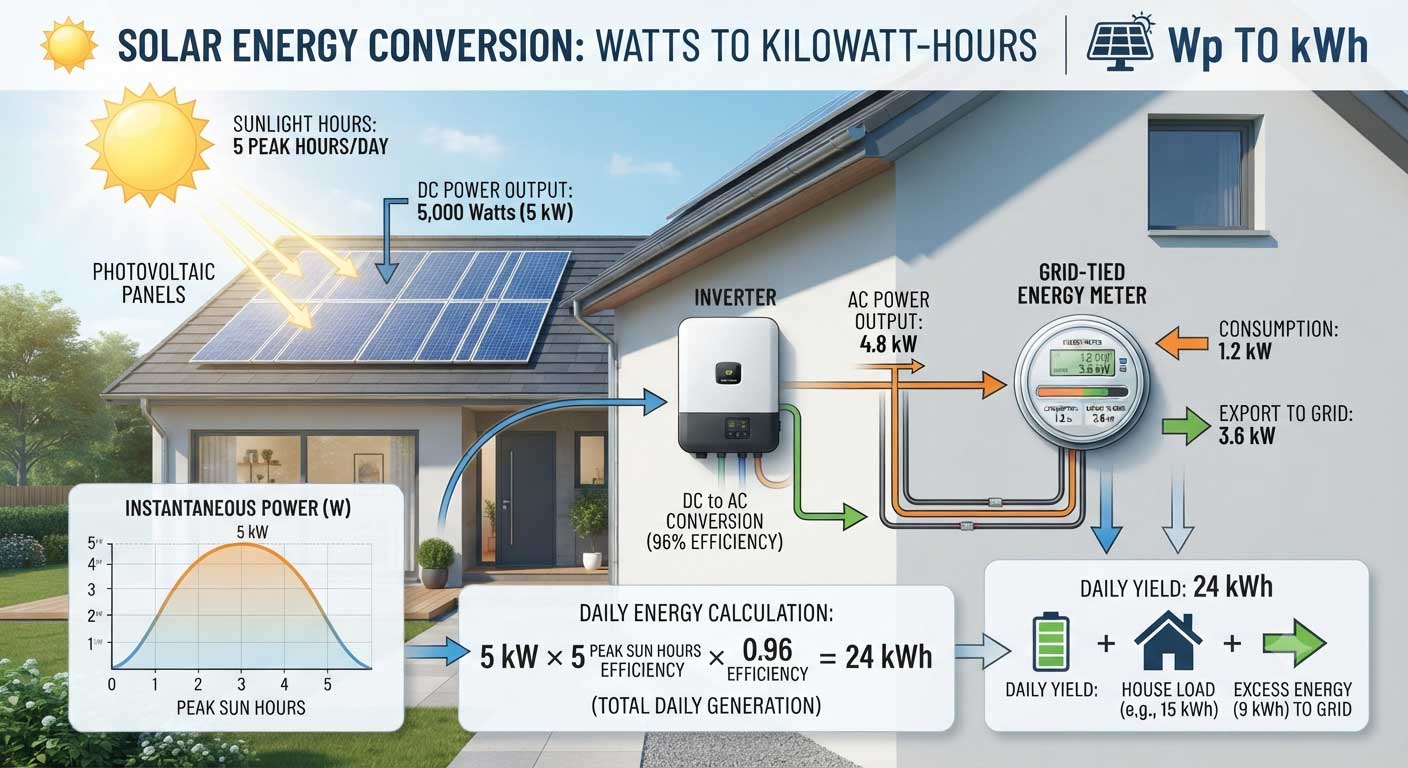
Watts measure power. Kilowatt-hours (kWh) measure energy production over time.
The calculation is:
Solar Panel Wattage × Sun Hours = Daily Energy Production
Example:
A 400W solar panel receiving 5 peak sun hours:
400W × 5 hours = 2000Wh
or:
2kWh per day
Actual production may be lower or higher depending on conditions.
Average Solar Panel Output by Wattage
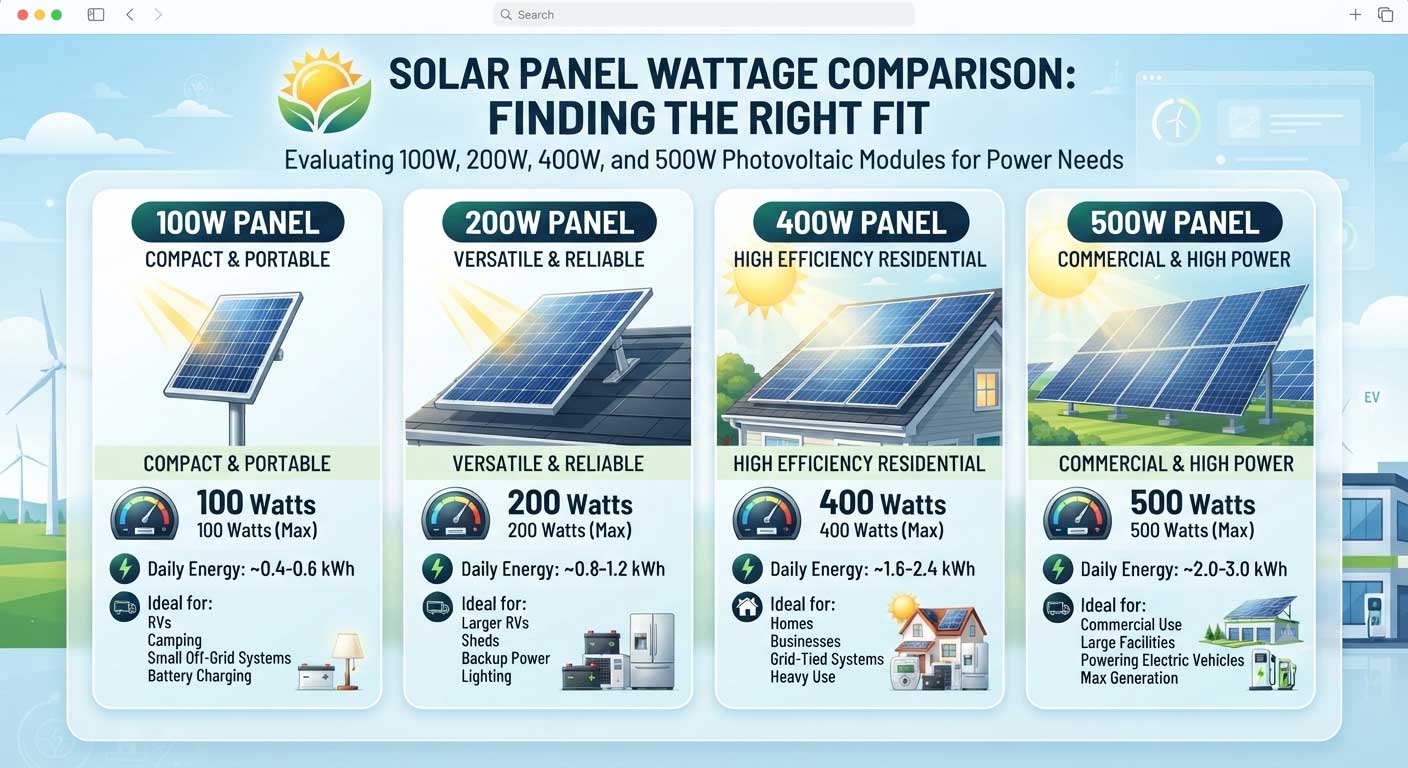
Solar Panel Production Examples
Different panel sizes produce different amounts of electricity.
| Solar Panel Size | Approximate Daily Output* |
|---|---|
| 100W panel | 0.4–0.6 kWh/day |
| 200W panel | 0.8–1.2 kWh/day |
| 300W panel | 1.2–1.8 kWh/day |
| 400W panel | 1.6–2.4 kWh/day |
| 500W panel | 2.0–3.0 kWh/day |
*Based on approximately 4–6 peak sun hours per day.
Actual output depends on geographic location and installation conditions.
How Much Electricity Do Solar Panels Generate?
Factors Affecting Solar Panel Output
A solar panel’s real electricity production depends on several variables.
1. Sunlight Availability
More sunlight generally means higher electricity generation.
Important factors include:
- Geographic location
- Season
- Weather conditions
- Daily sunlight hours
A solar panel installed in Arizona will typically produce more energy than the same panel installed in an area with frequent cloud cover.
2. Panel Orientation and Angle
Solar panels work best when positioned to receive maximum sunlight.
Performance is affected by:
- Roof direction
- Tilt angle
- Nearby obstacles
Incorrect installation can reduce the available solar energy reaching the cells.
3. Temperature Effects
Many people assume stronger sunlight always means higher output.
However, high temperatures can reduce solar panel efficiency.
Solar modules are tested at 25°C, but rooftop temperatures can become much higher during summer.
Solar Panel Output in Different Applications
Residential Solar Systems
Homeowners usually install panels ranging from:
- 350W
- 400W
- 450W
- 500W
A larger home may require multiple panels connected together.
For example:
10 × 400W panels = 4000W system capacity
This creates a 4kW solar system.
RV and Portable Solar Applications
Portable and flexible solar panels often use smaller wattages:
- 100W
- 120W
- 200W
- 300W
These systems are designed for:
- Camping
- RV travel
- Marine applications
- Off-grid power
Bright Solar develops flexible solar solutions for applications where lightweight design and installation flexibility are important.Visit product page:Flexible Solar Panels
Solar Panel kW Explained
Difference Between Watts, Kilowatts, and Kilowatt-Hours
Understanding these terms prevents confusion.
| Term | Meaning |
|---|---|
| Watt (W) | Instant power output |
| Kilowatt (kW) | 1,000 watts |
| Kilowatt-hour (kWh) | Energy produced or consumed over time |
Example:
A 5kW solar system does not produce exactly 5kWh every hour. Its output changes throughout the day.
How Many Watts Does a 400W Solar Panel Produce Daily?
Real-World Example
A 400W solar panel may produce:
- Around 2kWh/day with 5 peak sun hours
- Around 60kWh/month
- Around 700kWh/year
However, these numbers change depending on:
- Location
- Weather
- Panel orientation
- System losses
Improving Solar Panel Output
How to Increase Solar Energy Production
To maximize solar panel output:
- Keep panels clean
- Avoid shading
- Use correct installation angles
- Select suitable panel technology
- Monitor system performance
Even a high-wattage panel cannot perform well if sunlight exposure is limited.
Real Installation Experience: Why Wattage Is Not Everything
At Bright Solar, we have evaluated solar projects where a lower-wattage panel delivered better practical results because the installation matched the application.
For example:
A lightweight flexible solar panel may outperform a traditional rigid panel when installed on a curved RV roof because more usable surface area becomes available.
The best solar solution is not always the panel with the highest watt rating. It is the one that fits the environment, energy demand, and installation conditions.
Calculating Solar Panel Energy Production
How to Estimate Your Solar Panel Output
Calculating solar energy production requires more than looking at the panel wattage.
A basic calculation is:
Panel Wattage × Peak Sun Hours × System Efficiency = Daily Energy Production
Example:
A 400W solar panel with 5 peak sun hours and 85% system efficiency:
400W × 5 × 0.85 = 1700Wh
The expected output is approximately:
1.7kWh per day
System efficiency accounts for real-world losses from:
- Inverter conversion
- Wiring resistance
- Temperature effects
- Dust accumulation
- Battery charging losses
How Much Electricity Do Solar Panels Generate Per Month?
Monthly Solar Production Example
A single solar panel’s monthly production depends on its wattage and location.
Example:
A 400W solar panel:
- Daily production: around 1.6–2.4kWh
- Monthly production: around 48–72kWh
- Annual production: around 580–870kWh
A complete solar system multiplies this production.
For example:
| Solar System Size | Approximate Monthly Production |
|---|---|
| 3kW system | 300–450kWh |
| 5kW system | 500–750kWh |
| 10kW system | 1000–1500kWh |
Actual production varies depending on climate and installation conditions.
Why Solar Panel Output Changes During the Day
Solar Energy Generation Throughout the Day
Solar panels do not produce the same power from sunrise to sunset.
Typical pattern:
Morning
- Lower sunlight intensity
- Gradually increasing output
Midday
- Highest solar production
- Strongest sunlight exposure
Evening
- Reduced sunlight
- Lower electricity generation
The highest output usually occurs around solar noon, but the exact timing depends on location and season.
Solar Panel Output in Different Weather Conditions
Do Solar Panels Produce Electricity on Cloudy Days?
Yes, solar panels still generate electricity during cloudy weather, but production decreases.
Cloudy conditions affect output because:
- Less sunlight reaches solar cells
- Solar radiation becomes weaker
- Diffused light replaces direct sunlight
Modern photovoltaic technology can still capture indirect sunlight.
Do Solar Panels Produce Power in Winter?
Yes, solar panels can produce electricity during winter.
In some cases, cooler temperatures can improve panel efficiency because photovoltaic cells perform better at lower temperatures.
However, winter production may decrease because of:
- Shorter daylight hours
- Snow coverage
- Lower sun angle
Solar Panel Output and System Design
Why Panel Quantity Matters
One solar panel may not produce enough electricity for a complete home.
A larger system combines multiple panels.
Example:
20 × 400W panels:
20 × 400W = 8000W
This creates an 8kW solar array.
The total energy production depends on:
- Number of panels
- Solar exposure
- Inverter size
- Battery capacity
Choosing the Right Solar Panel Wattage
Higher Wattage vs More Solar Panels
Higher wattage panels offer advantages:
- More power from limited space
- Fewer panels needed
- Easier installation
However, smaller panels may be better for:
- Portable applications
- RV systems
- Curved surfaces
- Limited installation areas
The best choice depends on the application.
Common Mistakes When Estimating Solar Output
Mistake 1: Assuming Rated Wattage Equals Daily Production
A 400W panel does not produce 400W continuously.
Production changes based on:
- Sunlight
- Temperature
- Position
- Weather
Mistake 2: Ignoring System Losses
Real solar systems experience energy losses.
Common losses include:
- Inverter efficiency
- Cable resistance
- Battery charging losses
- Environmental conditions
Mistake 3: Choosing Panels Without Considering Space
A high-output panel is not always the best option.
Installation space and energy needs should guide the decision.
How Bright Solar Approaches Solar Panel Output
At Bright Solar, we focus on matching solar technology with real-world applications.
Different customers require different solutions:
- Homeowners need reliable daily energy production.
- RV users need lightweight and flexible power solutions.
- Marine users need durable outdoor performance.
- Off-grid projects need stable energy generation.
Solar panel output is not only about watts. It is about creating a system that produces usable electricity where and when it is needed.
FAQ About How Many Watts Does a Solar Panel Produce?
How many watts does a solar panel produce?
A typical solar panel produces between 250W and 450W, while some high-power modules exceed 500W. Actual output depends on sunlight, temperature, and installation conditions.
How much energy does a solar panel produce?
A solar panel’s energy production depends on wattage and sunlight hours. A 400W panel may produce approximately 1.6–2.4kWh per day under suitable conditions.
How much electricity do solar panels generate?
Solar panels generate electricity based on system size. A larger solar array with more panels produces more energy for homes and businesses.
How many kWh per solar panel can be produced?
A typical 400W solar panel may produce around 50–70kWh per month depending on location, weather, and system efficiency.
What is solar panel kW?
Solar panel kW represents the total power capacity of a solar system. For example, ten 400W panels create a 4kW solar system.
Do higher watt solar panels produce more electricity?
Yes, higher watt panels can produce more power under the same conditions, but total energy output also depends on installation and sunlight availability.
How much power does a 1000 watt solar system produce?
A 1000W solar system can produce approximately 4–6kWh per day depending on the number of sunlight hours and system efficiency.
Conclusion: How Many Watts Does a Solar Panel Produce?
How many watts does a solar panel produce? Most solar panels produce between 250W and 450W, while actual electricity generation depends on sunlight conditions, installation quality, and system design.
Understanding solar panel output requires looking beyond watt ratings. The real value comes from how much electricity a solar system produces over time.
Whether selecting solar panels for a home, RV, marine application, or off-grid project, choosing the correct wattage helps create a more efficient and reliable energy solution.
Bright Solar continues to develop flexible and practical solar technologies designed for different energy needs and outdoor environments.
The prev: How Long Do Solar Panel Batteries Last?The next: How Much Do Solar Panels Weigh?
Related recommendations
-

How to Protect Solar Panels from Hail?
181Solar panels can be better protected from hail through durable materials, suitable installation angles, secure mounting, and post-storm inspections.
View details -
How Much Does It Cost for One Solar Panel?
215How much does it cost for one solar panel? Discover real 2026 solar panel prices, watt-based costs, installation factors, and expert buying insights from Bright Solar.
View details -
what are solar panels made of?
139Discover what are solar panels made of, from silicon cells to glass and aluminum layers. Learn real manufacturing details and Bright solar insights.
View details -
how often do solar panels need to be cleaned?
197Most solar panels need cleaning once or twice a year, but dusty, agricultural, coastal, or polluted sites may require monthly monitoring or more frequent cle...
View details