How Long Do Portable Solar Panels Last?
How Long Do Portable Solar Panels Last?
Portable solar panels typically last between 10 and 25 years, depending on cell quality, outdoor exposure, folding frequency, and maintenance. Most high-quality monocrystalline portable solar panels still retain around 80% of their original output after 20 years, although connectors, hinges, and fabric backing often wear out before the solar cells themselves.
I’ve handled portable solar panels that looked destroyed externally — scratched frames, faded fabric, dusty connectors — yet they still produced usable power in the field. The cells survived. The accessories usually didn’t.
That difference matters more than most buyers realize.
Portable Solar Panels Age Differently Than Rooftop Systems
A rooftop solar installation stays fixed for decades.
Portable solar panels live a rougher life.
They get:
- Folded repeatedly
- Tossed into truck beds
- Dragged through campsites
- Exposed to salt air
- Left in rain
- Overheated in vehicles
That constant movement changes the wear pattern completely.
In my experience testing off-grid systems during overlanding trips in Nevada and Utah, the solar cells themselves were rarely the first failure point. More commonly, I saw:
- Cable fatigue
- Broken MC4 connectors
- Cracked kickstands
- Water intrusion near junction boxes
- Delamination around folding seams
The panel still worked. The structure around it started failing first.
What Is the Average Lifespan of Portable Solar Panels?
Most quality portable solar panels fall into this range:
| Product Quality | Estimated Lifespan |
|---|---|
| Budget portable panels | 3–7 years |
| Mid-range monocrystalline panels | 8–15 years |
| Premium portable solar panels | 15–25 years |
Premium panels from reliable manufacturers often use:
- ETFE surface coatings
- Reinforced stitching
- Higher-grade busbars
- Better waterproofing
- Industrial connectors
These details matter outdoors.
According to the National Renewable Energy Laboratory (NREL), solar photovoltaic degradation rates average around 0.5% annually for quality panels.
Source: National Renewable Energy Laboratory
That means many solar panels can still produce roughly 88–90% of their original output after 20 years under controlled conditions.
Portable panels, however, face more mechanical stress than fixed installations.
What Actually Wears Out First?
1. Folding Hinges and Fabric Backing
This is the weak spot on many foldable systems.
Repeated opening and closing gradually weakens:
- Stitching
- Adhesives
- Support fabric
- Corner reinforcement
I once inspected a camping panel used weekly for four years along the Pacific Northwest coast. The cells were still functional, but the folding seams had softened from moisture exposure and salt air.
The owner repaired the exterior twice before replacing the panel entirely.
2. Connectors and Wiring
Portable solar cables experience constant bending.
Over time:
- Copper strands fatigue
- Connectors loosen
- Corrosion forms
- Resistance increases
A small voltage drop may seem minor initially. But in lower-light conditions, poor cable integrity noticeably affects charging speed.
Heat Is One of the Biggest Lifespan Killers
Most users worry about rain.
Heat usually causes more damage.
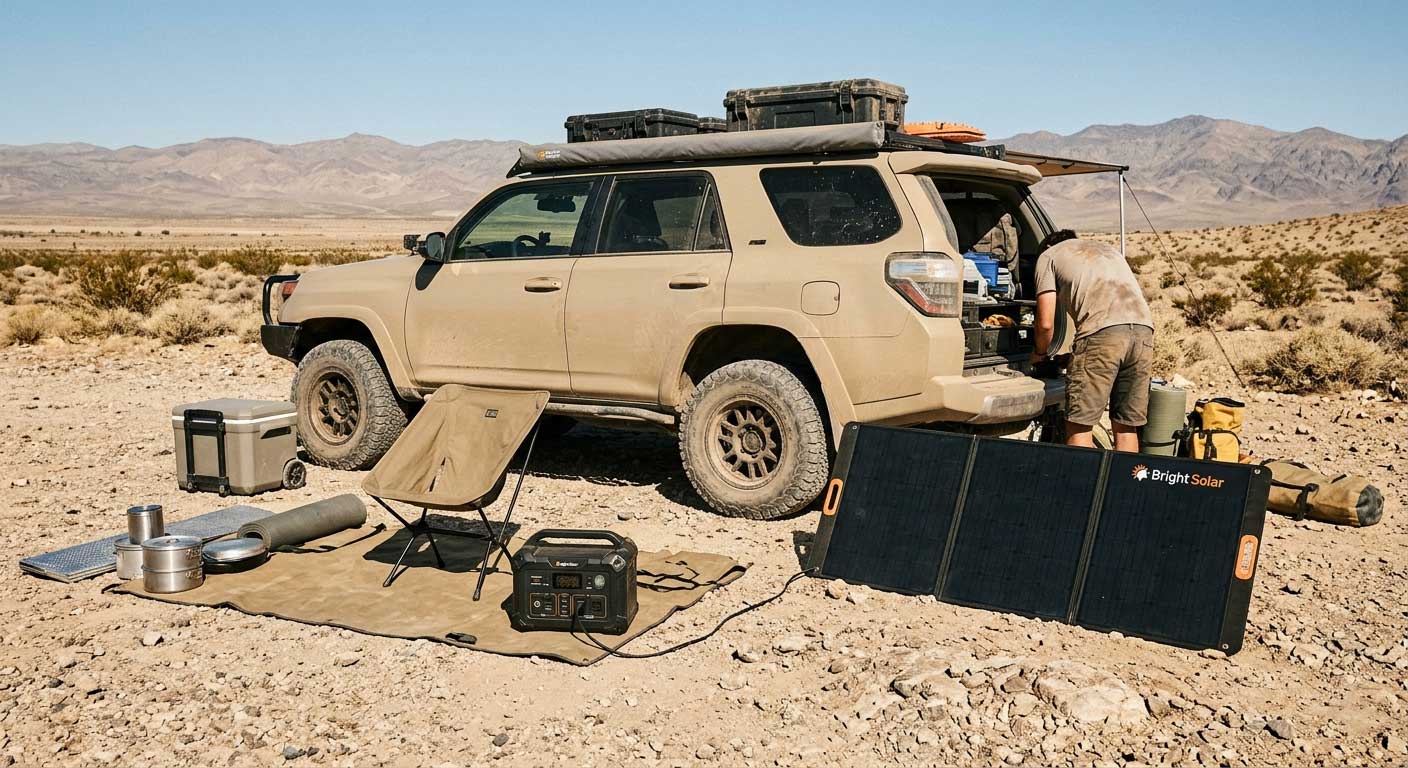
Portable panels often sit:
- On hot vehicle roofs
- On dark rocks
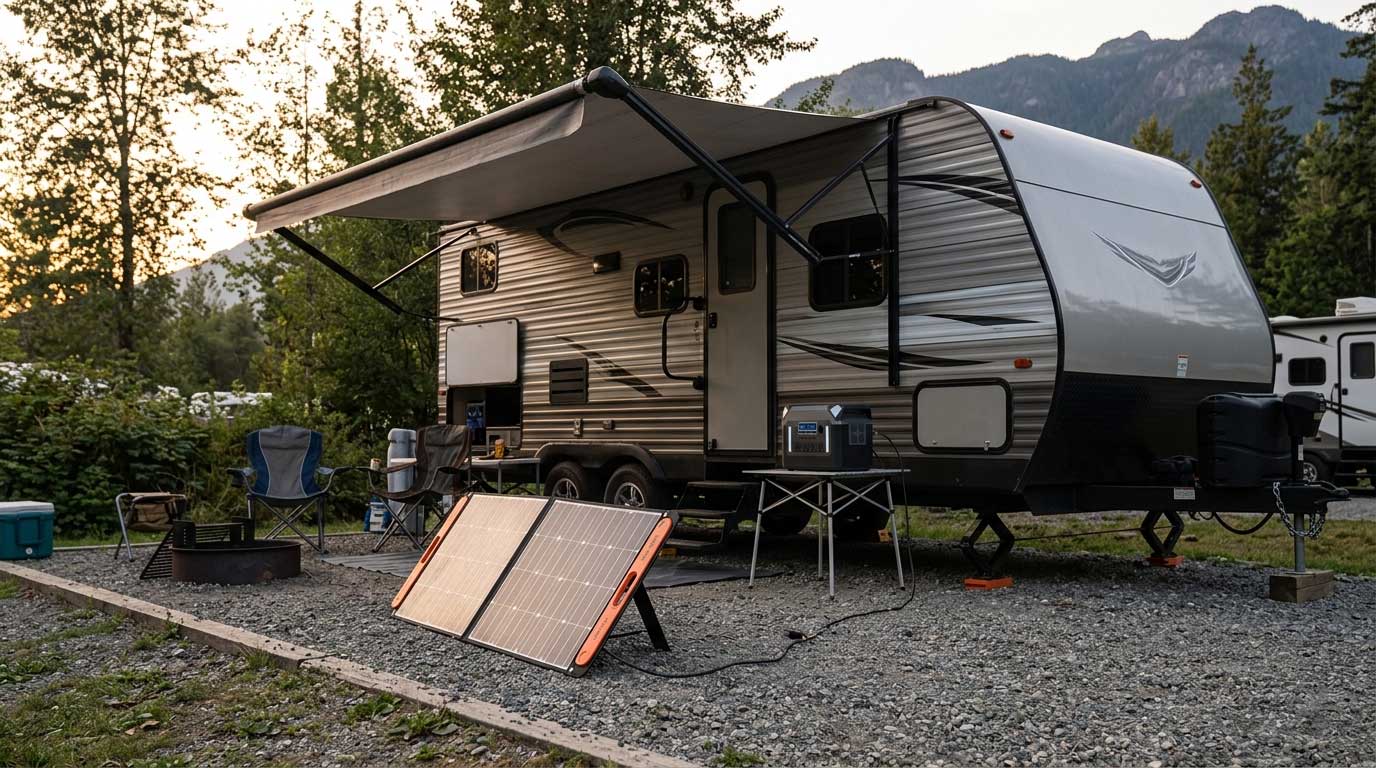
- Beside reflective RV surfaces
- Under direct desert sun
I measured surface temperatures above 158°F (70°C) on a foldable solar panel during July testing outside Phoenix.
That kind of sustained heat accelerates:
- Adhesive breakdown
- Cell degradation
- Delamination
- Connector aging
The International Energy Agency (IEA) notes that high operating temperatures reduce photovoltaic efficiency and can accelerate long-term material wear.
Source: International Energy Agency
How Long Do Portable Solar Panels Last in Real Outdoor Use?
Laboratory numbers rarely match real life.
In actual field conditions:
- Frequent travel reduces lifespan
- Moisture exposure matters
- Cheap storage damages panels
- Rough handling shortens durability
Here’s a more realistic expectation:
| Usage Style | Typical Lifespan |
|---|---|
| Occasional camping | 15–20 years |
| Weekend RV travel | 10–15 years |
| Heavy overlanding use | 5–10 years |
| Commercial daily deployment | 3–8 years |
The difference comes down to abuse and exposure.
A portable solar panel that stays folded safely in climate-controlled storage ages slowly.
One strapped permanently to a dusty truck roof ages much faster.
Does Waterproofing Improve Lifespan?
Yes — but only partially.
Many portable panels advertise:
- IP65
- IP67
- Splash resistance
That protects against rain and dust.
But waterproof ratings do not fully protect:
- Hinges
- Fabric backing
- Cable strain points
- Zippers
- Junction box seals
I’ve seen “water-resistant” portable solar kits develop internal corrosion after repeated damp storage inside RV compartments.
Moisture trapped after use is a bigger issue than rain itself.
Monocrystalline vs Polycrystalline Lifespan
Modern portable systems overwhelmingly use monocrystalline cells.
Why?
Because they provide:
- Higher efficiency
- Better low-light performance
- Longer operational lifespan
- Smaller footprint
Polycrystalline portable panels still exist in low-cost products, but they generally:
- Degrade faster
- Produce lower efficiency
- Perform worse in heat
For long-term durability, monocrystalline wins almost every time.
How to Make Portable Solar Panels Last Longer
Store Panels Correctly
Never store portable solar panels:
- Wet
- Folded while dirty
- Inside overheated vehicles
Heat and trapped moisture accelerate aging.
Avoid Excessive Cable Stress
Cable fatigue is extremely common.
Don’t sharply bend connectors or pull cables from awkward angles repeatedly.
Clean the Surface Carefully
Dust reduces efficiency.
But aggressive cleaning damages coatings.
I recommend:
- Soft microfiber cloth
- Mild water rinse
- No abrasive cleaners
Especially with ETFE-coated panels.
Are Portable Solar Panels Worth the Investment?
For many users, absolutely.
Portable solar panels provide:
- Silent power generation
- Low maintenance
- Renewable energy
- Emergency backup capability
- Mobile off-grid charging
BloombergNEF reports continuing growth in portable energy storage and mobile solar adoption, especially among RV travelers and emergency preparedness users.
Source: BloombergNEF
The technology is far more mature today than it was even five years ago.
FAQ:How Long Do Portable Solar Panels Last?
Do portable solar panels lose efficiency over time?
Yes. Most quality panels gradually lose around 0.5% output annually.
Can portable solar panels last 20 years?
Premium monocrystalline portable solar panels can last 20 years or longer with proper care and moderate use.
What shortens portable solar panel lifespan the most?
Excessive heat, rough transport, cable damage, moisture exposure, and folding stress are the most common causes.
Are portable solar panels waterproof?
Many are weather-resistant but not fully waterproof for prolonged exposure.
Do portable solar panels stop working suddenly?
Usually not. Performance gradually declines over time rather than failing instantly.
Final Thoughts
So, how long do portable solar panels last in the real world?
Longer than most people expect — if treated properly.
The solar cells themselves are remarkably durable. In many cases, connectors, hinges, fabrics, or wiring fail long before the photovoltaic cells stop producing useful energy.
At Bright Solar, we’ve found that real lifespan depends less on marketing claims and more on how the system is used outdoors. Occasional campers may get two decades from a quality panel. Heavy off-grid travelers may wear one down much sooner.
Portable solar survives best when it’s handled like equipment — not like luggage.
The prev: How Does a Portable Solar Panel Work?The next: How Much Are Portable Solar Panels?
Related recommendations
-

how much silver is in a solar panel?
271A modern 400W crystalline-silicon solar panel typically contains about 2.8–8 grams of silver, depending on cell technology and metallization.
View details -
common flexible solar panel problems and how to fix them?
292Discover common flexible solar panel problems and how to fix them with real repair experience, failure analysis, maintenance tips, and practical solutions from Bright Solar.
View details -
What can i run on a 100 watt solar panel?
256What can i run on a 100 watt solar panel? Explore real power examples, device compatibility, energy calculations, and practical off-grid uses with Bright Solar.
View details -
how to get my solar panels azmuth and declination?
139Learn how to get my solar panels azmuth and declination with field methods, solar geometry data, and Bright solar engineer insights for accurate panel alignment.
View details