How Long Do Flexible Solar Panels Last?
How Long Do Flexible Solar Panels Last?
Flexible solar panels usually last 5 to 15 years, depending on material quality, installation method, UV exposure, and heat buildup. Premium ETFE-coated flexible panels can maintain usable performance for over a decade, while cheaper PET-based models often degrade much faster in outdoor environments.
I realized this difference during a marina inspection project near San Diego. Two boats used similar-looking flexible panels. One set had severe yellowing and output loss after just three summers. The other, built with ETFE protection and proper ventilation spacing, was still performing surprisingly well after nearly nine years.
That gap is where most buyers get misled.
Flexible solar panels are marketed heavily around portability and convenience. Longevity gets buried in the fine print.
Why Flexible Solar Panels Usually Have Shorter Lifespans
Rigid solar panels mounted on rooftops commonly survive 25 years or more.
Flexible panels rarely do.
That doesn’t mean flexible technology is bad. It means the engineering trade-offs are different.
Flexible Panels Sacrifice Structural Protection
Traditional glass solar panels protect cells with:
- Tempered glass
- Aluminum framing
- Thick backing layers
- Ventilated mounting systems
Flexible solar panels remove most of that structure to reduce weight and allow bending.
The result:
- Higher heat exposure
- More physical stress
- Faster UV wear
- Increased moisture vulnerability
The National Renewable Energy Laboratory (NREL) has repeatedly documented how elevated operating temperatures accelerate photovoltaic degradation rates.
Flexible panels naturally run hotter because airflow underneath them is often limited.
That heat becomes the silent killer.
Flexible Solar Panel Lifespan by Material Type
Not all flexible solar panels age the same way.
The surface coating matters more than many people realize.
Average Lifespan by Construction Type
| Flexible Panel Type | Typical Lifespan |
|---|---|
| PET-coated flexible panels | 3–7 years |
| ETFE-coated flexible panels | 8–15 years |
| Marine-grade semi-flexible panels | 10–15 years |
| Cheap unbranded thin-film panels | 2–5 years |
The worst failures I’ve personally inspected were not electrical failures. They were surface failures.
Yellowing. Delamination. Edge cracking. Moisture intrusion.
Once that begins, efficiency drops quickly.
Heat Is the Biggest Enemy of Flexible Solar Panels
People often blame rain or snow. In practice, heat does more damage.
Especially on RV roofs.
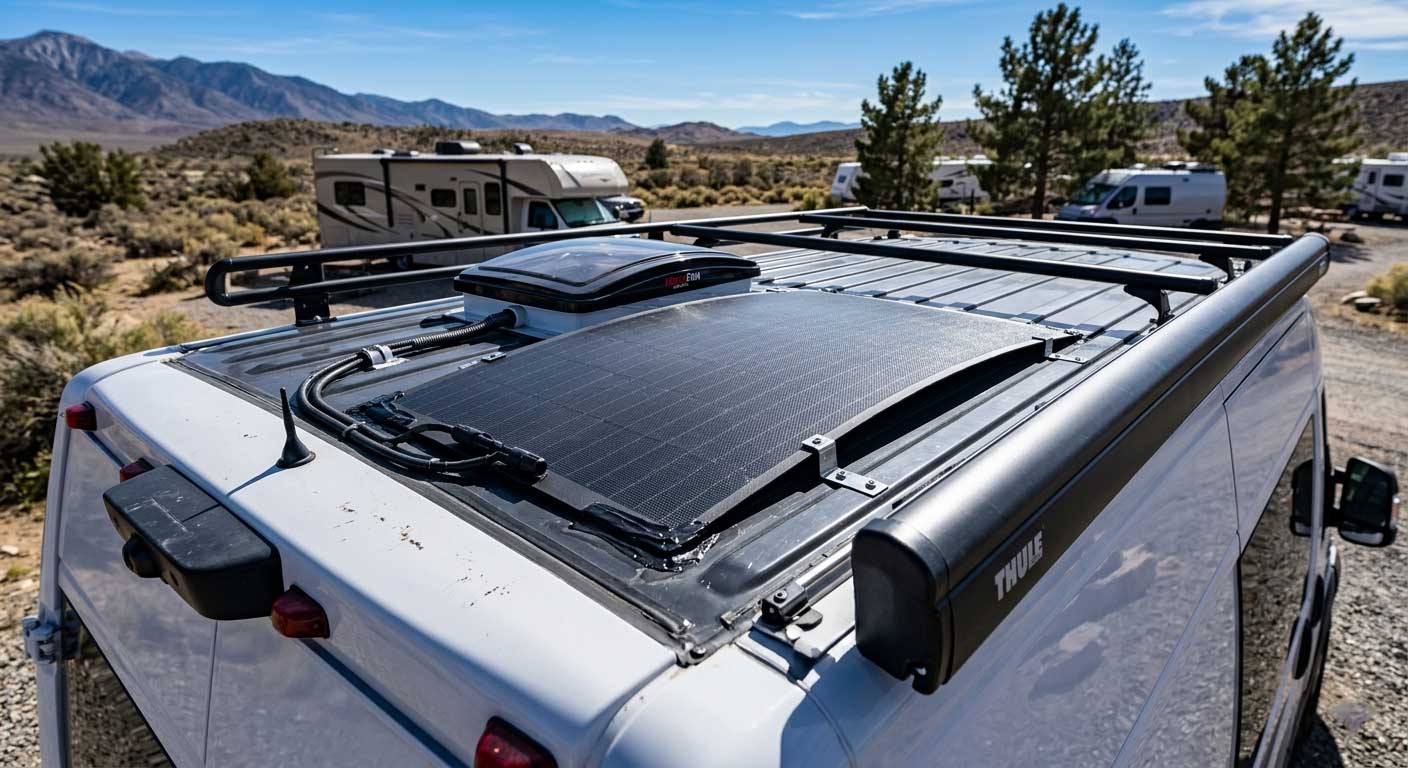
I measured surface temperatures on dark van roofs in Arizona during July testing. Some flexible panels exceeded 170°F (76°C) under direct sun.
That’s brutal for adhesives and encapsulation layers.
Why Overheating Shortens Flexible Solar Panel Life
Excessive heat can cause:
- Cell microcracks
- Adhesive failure
- Delamination
- Reduced voltage stability
- Faster efficiency decline
The International Energy Agency (IEA) notes that thermal management remains one of the critical durability challenges in lightweight photovoltaic systems.
A flexible panel mounted directly against metal roofing without airflow may degrade twice as fast as one installed with spacing underneath.
That installation detail matters more than many buyers realize.
The Truth About Flexible Solar Panel Degradation
Manufacturers rarely explain degradation clearly.
Here’s the practical reality:
A flexible solar panel may still “work” after years outdoors while producing dramatically less power.
That distinction matters.
Real-World Output Decline
Typical degradation patterns:
| Years of Use | Expected Performance |
|---|---|
| Year 1 | 97–100% |
| Year 3 | 90–95% |
| Year 5 | 80–90% |
| Year 10 | 65–85% |
Cheaper flexible panels sometimes degrade even faster under marine or desert conditions.
Salt exposure accelerates corrosion. Constant vibration creates microfractures. Repeated bending weakens internal solder joints.
I’ve seen boat-mounted panels lose over 30% output in under four years because they were constantly flexing with deck movement.
Semi Flexible Solar Panels Usually Last Longer
There’s an important difference between “fully flexible” and “semi flexible.”
The fully flexible ultra-thin models bend more easily—but durability often suffers.
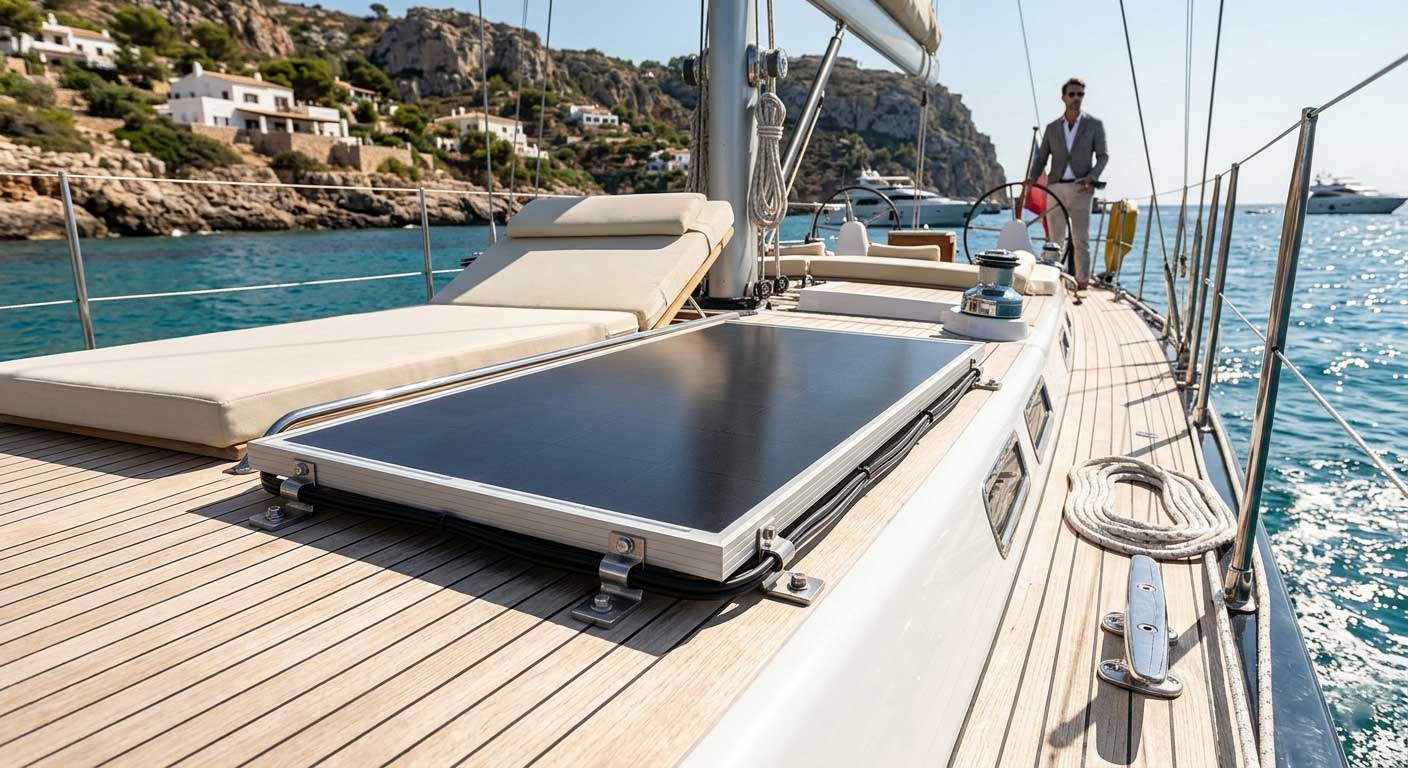
Semi-flexible panels use reinforced backing that limits extreme flexing while improving structural stability.
Why Semi Flexible Designs Survive Longer
Advantages include:
- Better cell protection
- Reduced stress fractures
- Improved mounting stability
- Lower risk of internal wire fatigue
- Better thermal consistency
That’s why many marine installers prefer semi-flexible products instead of ultra-thin rollable panels.
Especially offshore.
What Causes Flexible Solar Panels to Fail Early?
The most common failure causes are surprisingly predictable.
Top Reasons Flexible Solar Panels Stop Performing
1. Excessive Heat Buildup
Poor ventilation accelerates degradation dramatically.
2. Cheap Surface Materials
PET coatings degrade much faster under UV exposure.
3. Repeated Flexing
Constant bending weakens solar cells over time.
4. Moisture Intrusion
Water entering poorly sealed edges causes corrosion.
5. Improper Installation
Direct adhesive mounting onto hot metal surfaces traps heat.
I’ve also seen failures caused by simple over-tightening during installation. Flexible panels are thinner than most people expect. Too much mounting pressure can create invisible cell fractures immediately.
Can Flexible Solar Panels Last 20 Years?
Technically possible. Rare in real-world use.
Some premium ETFE flexible panels may approach 15–20 years under mild conditions and careful installation.
But most portable or RV-mounted flexible panels experience:
- Higher vibration
- More movement
- Stronger heat cycling
- Greater environmental stress
That shortens practical lifespan.
Rigid framed panels still dominate long-term durability comparisons.
How to Make Flexible Solar Panels Last Longer
A few installation decisions make a massive difference.
Best Practices for Longer Lifespan
- Leave airflow underneath panels
- Avoid sharp bending angles
- Clean salt and dirt buildup regularly
- Use UV-resistant mounting materials
- Store portable panels indoors when unused
- Avoid walking directly on panels
One RV owner I worked with installed aluminum spacer channels underneath his flexible panels to improve ventilation. Five years later, those panels were still operating better than nearby fully bonded systems installed at the same campground.
Sometimes lifespan improvements come from surprisingly simple changes.
FAQ:How Long Do Flexible Solar Panels Last?
How long do flexible solar panels last on RVs?
Most RV flexible solar panels last between 5 and 10 years depending on heat exposure, mounting method, and panel quality.
Do flexible solar panels degrade faster?
Yes. Flexible solar panels generally degrade faster than rigid glass panels because they experience more heat and structural stress.
Are ETFE flexible solar panels better?
ETFE-coated flexible panels usually offer better UV resistance, longer lifespan, and improved weather durability than PET-coated models.
Can flexible solar panels survive rain?
Quality flexible solar panels are waterproof and designed for outdoor use, but poor edge sealing can eventually allow moisture intrusion.
Are flexible solar panels worth buying?
They are ideal when lightweight installation, portability, or curved surfaces matter more than maximum lifespan.
Final Thoughts on How Long Do Flexible Solar Panels Last
Flexible solar panels are not disposable products anymore. The better models have improved enormously over the past decade.
Still, they operate under harsher physical conditions than traditional rigid panels.
That reality matters.
A high-quality flexible solar panel installed with proper airflow can remain productive for many years. A cheap panel glued directly onto a hot roof may degrade surprisingly fast.
At Bright Solar, we’ve found that lifespan depends less on marketing claims and more on installation discipline, heat management, and material quality. Buyers who understand those three things usually get far better long-term performance from flexible solar systems.
The prev: How Much Is a Portable Solar Panel?The next: How to Attach Flexible Solar Panel?
Related recommendations
-

How Many Watts Does a Solar Panel Produce?
297Learn how many watts does a solar panel produce, understand solar panel output, energy generation factors, and kWh production with Bright Solar.
View details -
Can Solar Panels Store Energy?
142No. Solar panels generate electricity but do not store it. A separate battery system can store surplus solar energy for later use.
View details -
how to fix flexible solar panel on roof?
258Learn how to fix flexible solar panel on roof surfaces securely using proven adhesive and fastening methods. Expert installation advice, real-world experience, and durability tips from Bright Solar.
View details -
How Much Electricity Does a Solar Panel Produce?
179How much electricity does a solar panel produce? Learn the real daily, monthly, and annual energy output of modern solar panels and the factors that affect performance with Bright Solar.
View details