What is EL Test and Why Bright Solar Uses It on Every Panel
If you’re looking into solar panels and start comparing brands, you may see the term EL test or electroluminescence test pop up. It sounds technical, but the idea behind it is simple: it’s a way to “see inside” a solar panel and find defects that the human eye can’t catch.
So, what is EL Test in practice, and why does Bright Solar make such a big deal of it?
What is EL Test?
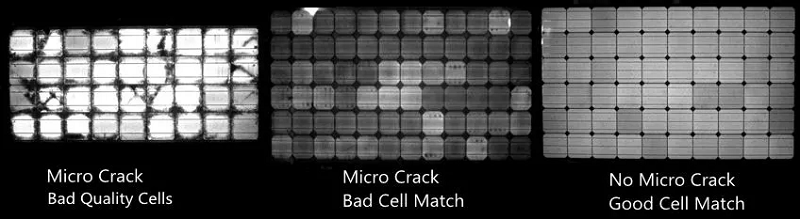
In basic terms, EL stands for electroluminescence. When a solar cell is powered with a small current in the dark, it emits a very faint light. A special camera can capture this light and turn it into an image.
That image shows:
- Cracks that are invisible to the naked eye
- Broken or interrupted fingers and busbars
- Poorly connected cells or areas that are not working properly
- Regions with lower efficiency inside the same module
So when we ask “What is EL Test”, the short answer is: it’s an imaging test that lets us see hidden electrical and mechanical problems in a solar panel before it leaves the factory.
How Bright Solar Uses EL Testing
At Bright Solar, EL testing is not a random spot check. It is applied to 100% of our solar panels. That includes rigid, flexible and portable modules.
The test is performed multiple times during production, typically:
- After cell stringing and layup – to see if any cracks appeared during early handling
- Before lamination – to confirm that the cell matrix is intact
- After lamination – to make sure the lamination process itself did not create new micro-cracks or defects
Each module is placed in an EL test unit, current is applied, and a high-resolution camera captures the EL image. Our team then evaluates the pattern to identify:
- Hairline cracks in cells
- Dark areas where current does not flow
- Defects in the front electrode grid
- Zones of lower expected output
Panels that do not meet the internal standard are rejected or reworked, instead of being shipped to the customer.
Why Does EL Testing Matter to You?
You might wonder, what is EL Test doing for me as a user? You don’t see the images, but you feel the results over time. There are a few clear benefits:
- Higher and more stable efficiency
Panels that pass EL testing are more likely to deliver their rated power. Fewer hidden defects mean more reliable energy output over the years. - Fewer panels to reach your target power
With better-performing modules, you may not need to over-design the system. That can reduce your upfront cost, space requirements and mounting hardware. - Better durability under stress
Micro-cracks can grow when panels are exposed to vibration, temperature changes, wind or movement. EL-tested panels are less likely to have these weaknesses, which is critical for marine use, RVs, trailers and off-grid installations. - Less risk of early failure
Substandard panels might work on day one, but performance can drop quickly if they contain hidden defects. EL testing helps avoid that scenario.
EL Test and Bright Solar Applications
Because Bright Solar panels are often used in demanding environments – boats, off-grid cabins, rooftops, portable kits – quality control is not just a marketing phrase.
Panels may face:
- Strong UV and heat
- Salt spray in marine conditions
- Bumps and flexing on RV roofs or mobile systems
- Frequent temperature swings in off-grid sites
In these situations, knowing that every module has been through EL testing gives installers and end users more confidence. When you ask “What is EL Test and do I really need it?”, the answer is that it’s one of the most effective tools we have to catch problems before they ever reach your roof or your boat.
Bright Solar – Taking EL Test Seriously
To sum it up, What is EL Test for Bright Solar? It is a mandatory quality gate, not an optional step. Every solar panel circuit we produce is evaluated with an EL test machine so that micro-cracks, weak areas and hidden defects are found early.
For you, that translates into:
- More consistent power output
- Longer service life
- Better return on your solar investment
When you choose Bright Solar panels, you’re not just buying watts on a label; you’re choosing modules that have been checked from the inside out, with EL testing as a key part of the process.
Related recommendations
-

Glass Solar Panels for RVs
111Customer Needs: Are there solar panels that reduce wind resistance during RV operation?Project Time: 2024Country: AustraliaCustomer Type: Solar Panel Brand OwnerProduct: RV Solar PanelProduct Power: 100WOur Solution: Based on the customer's needs,...
View details -
solar battery charger from Bright Solar for Life On the Move
256Bright Solar’s solar battery charger is ultra lightweight, foldable, water resistant and fast charging, with dual USB output to power phones and devices on the go.
View details -
advantage of solar panel – Why More People Choose Bright Solar
190advantage of solar panel is clear: it cuts electricity bills, reduces carbon footprint and offers long-term clean power. Bright Solar explains how solar panels save money and protect the environment.
View details -
Bright Solar Staff Party 2022
230Bright Solar Staff Party Everyone enjoy the moment in the party, smile in the face just like sunshine on the solar panel ! Happy work ,Happy life with Bright Solar !
View details