Bright Solar L Series 100W Flexible Solar Panel: Product Overview
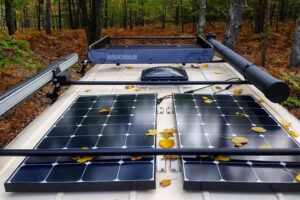
Bright Solar’s L Series 100W flexible solar panel is a lightweight solar panel designed for RVs and campers, mobile devices, outdoor power, some marine applications, and off-grid solar applications.
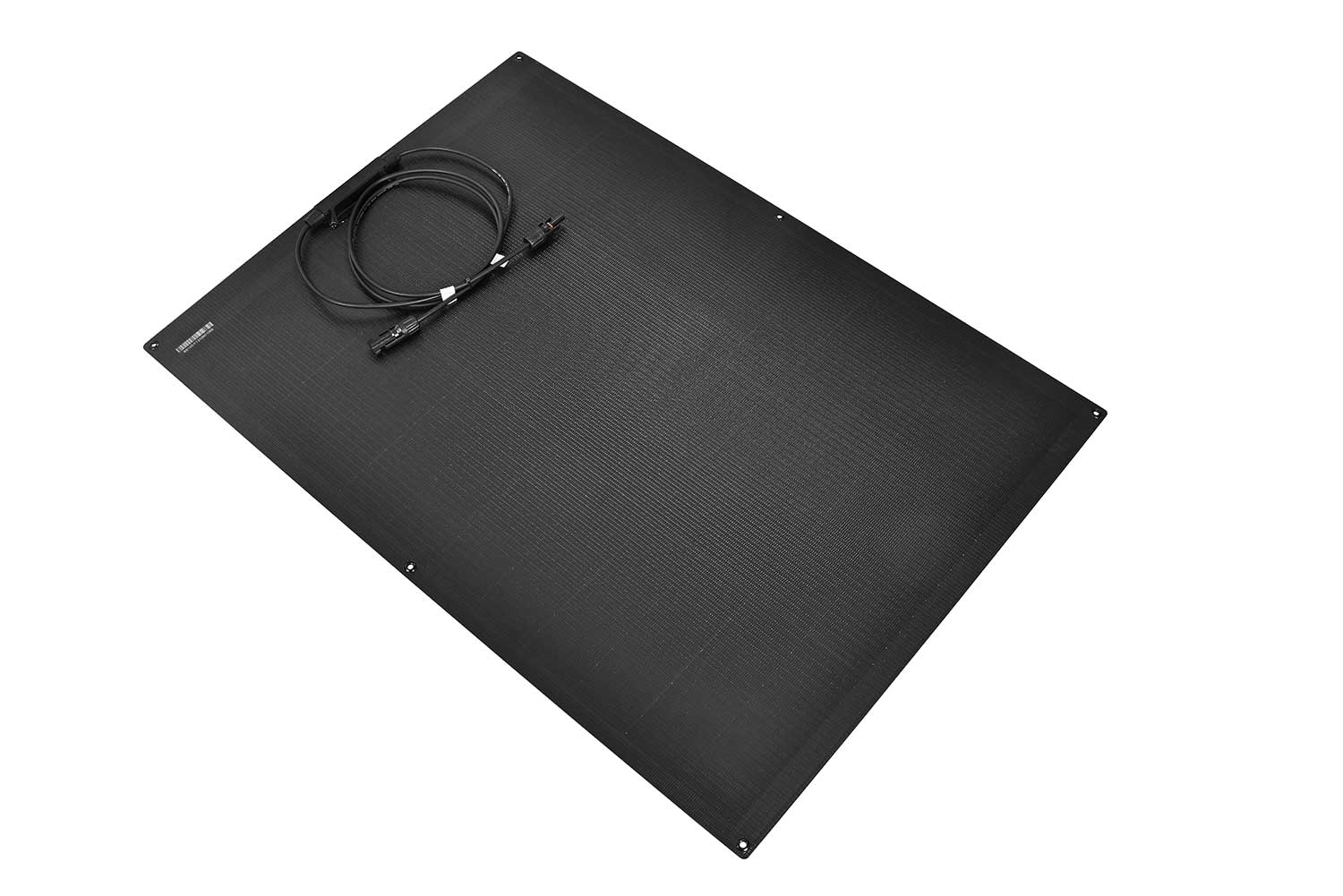
The L Series 100W flexible solar panel has a maximum bending capacity of 30%. The standard 100W product weighs approximately 1.8 kg, features a thin structure, and supports monocrystalline/Sunpower/HPBC cell options.Bright Solar also supports product size and related configuration customization, suitable for B2B OEM, ODM, and bulk procurement projects.
100W Flexible Solar Panel Specifications
The following specifications are taken from the supplied Bright Solar product sheet. Confirm the final datasheet and configuration with Bright Solar before system design or purchase.
| Parameter | Specification |
|---|---|
| Model Number | BS100-ET-M(E) |
| Nominal Peak Power (Pmax) | 100 W |
| Maximum Power Voltage (Vmp) | 20 V |
| Maximum Power Current (Imp) | 5.00 A |
| Open Circuit Voltage (Voc) | 25.00 V |
| Short Circuit Current (Isc) | 5.32 A |
| Solar Cell Type | HPBC/Mono |
| Efficiency | 22.5%–25.8% |
| Dimensions | 1072 × 532 × 2.8 mm |
| Weight | 1.8 kg |
| Optional accessories | 4.0 mm² PV cables: 90 cm positive and 90 cm negative, with MC4 connectors; or a single 2-core × 2.5 mm² cable |
| Customization | Custom sizes supported |
Key Features of the 100W Flexible Solar Panel
The 100W flexible solar panel is designed primarily for the practical installation needs of mobile and off-grid applications, focusing on addressing the limitations of traditional rigid solar panels in terms of weight, installation space, and mechanical stress in mobile environments.
100W Power Output
A 100W rating describes the module’s nominal peak power under specified test conditions; it is not a promise of constant 100W output in the field. A single module can serve as a small generation unit, while multiple modules can be combined to build a higher-capacity array. For RV projects, the number of modules should be selected after checking roof area, shading, energy demand, controller limits, and system voltage.
For brands and distributors, a 100W module can also form one item in a tiered product range. Product combinations should be designed around electrical compatibility rather than wattage alone.
Flexible and Lightweight Design
Bright Solar lists the L Series 100W panel at approximately 1.8 kg, with product thickness varying by version from about 2.8 to 3.1 mm and flexibility of up to 30%. These are product-sheet figures; confirm the applicable thickness and permitted bend specification for the exact model.
RV roofs may contain air conditioners, skylights, racks, vents, and other obstructions. A thin module may help fit some restricted or curved areas and its low mass may reduce the additional module weight. It does not remove the need to assess roof loading, surface condition, and safe routing.
Flexible does not mean foldable or capable of unlimited bending. Keep the module within its specified bend limits during handling, transport, and installation.
Installation Options
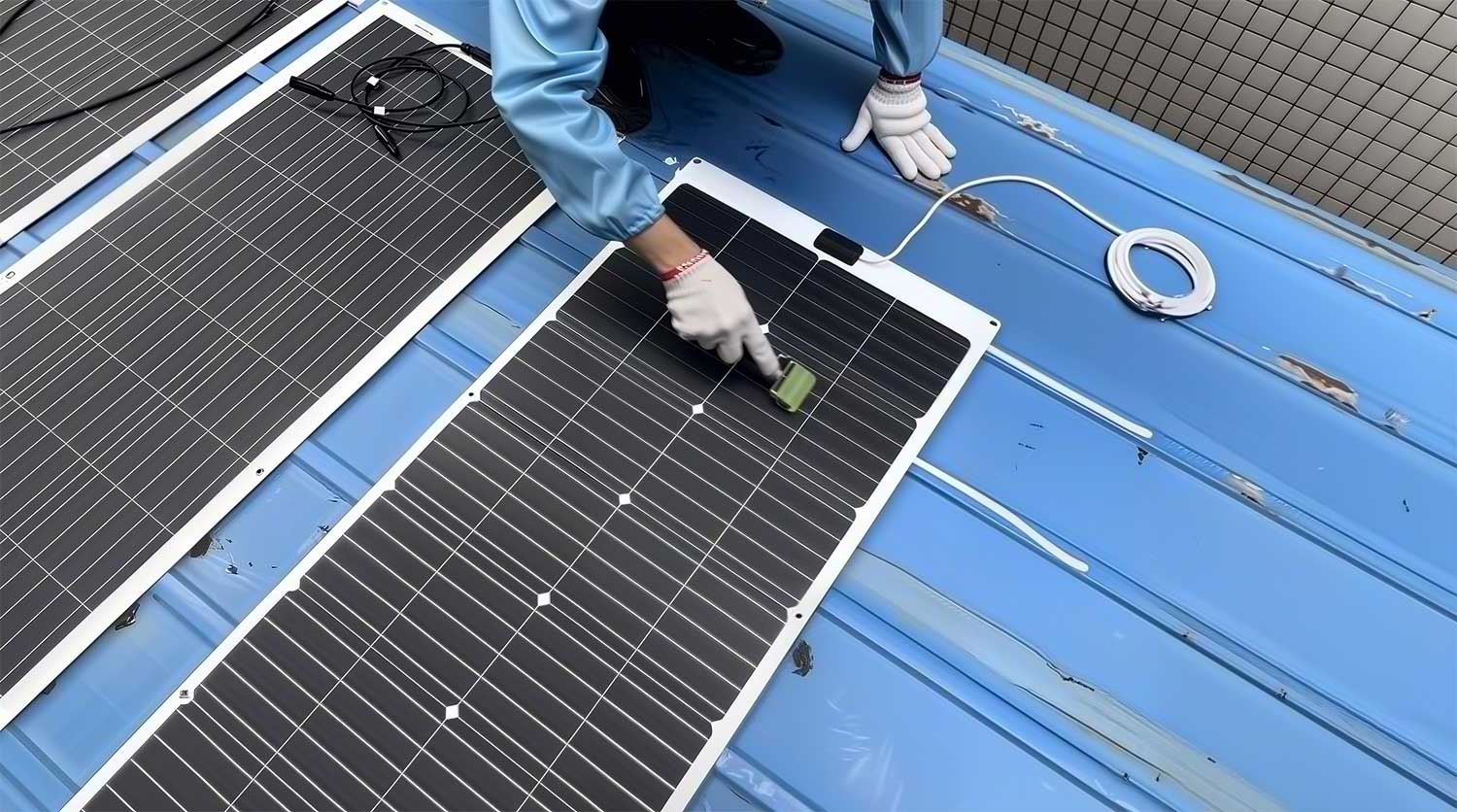
Bright Solar states that L Series modules can be installed with suitable industrial adhesive or VHB tape and that some installations may avoid drilling. The appropriate method depends on the substrate, surface finish, adhesive compatibility, temperature, humidity, and long-term exposure. Test the intended materials and process before production-scale installation, particularly for vehicle OEM projects.
- RV roofs and camper vans
- Selected mobile equipment
- Some curved or irregular mounting surfaces
These are potential applications, not blanket approval for every roof or substrate. Follow the product’s current installation instructions and the adhesive manufacturer’s requirements.
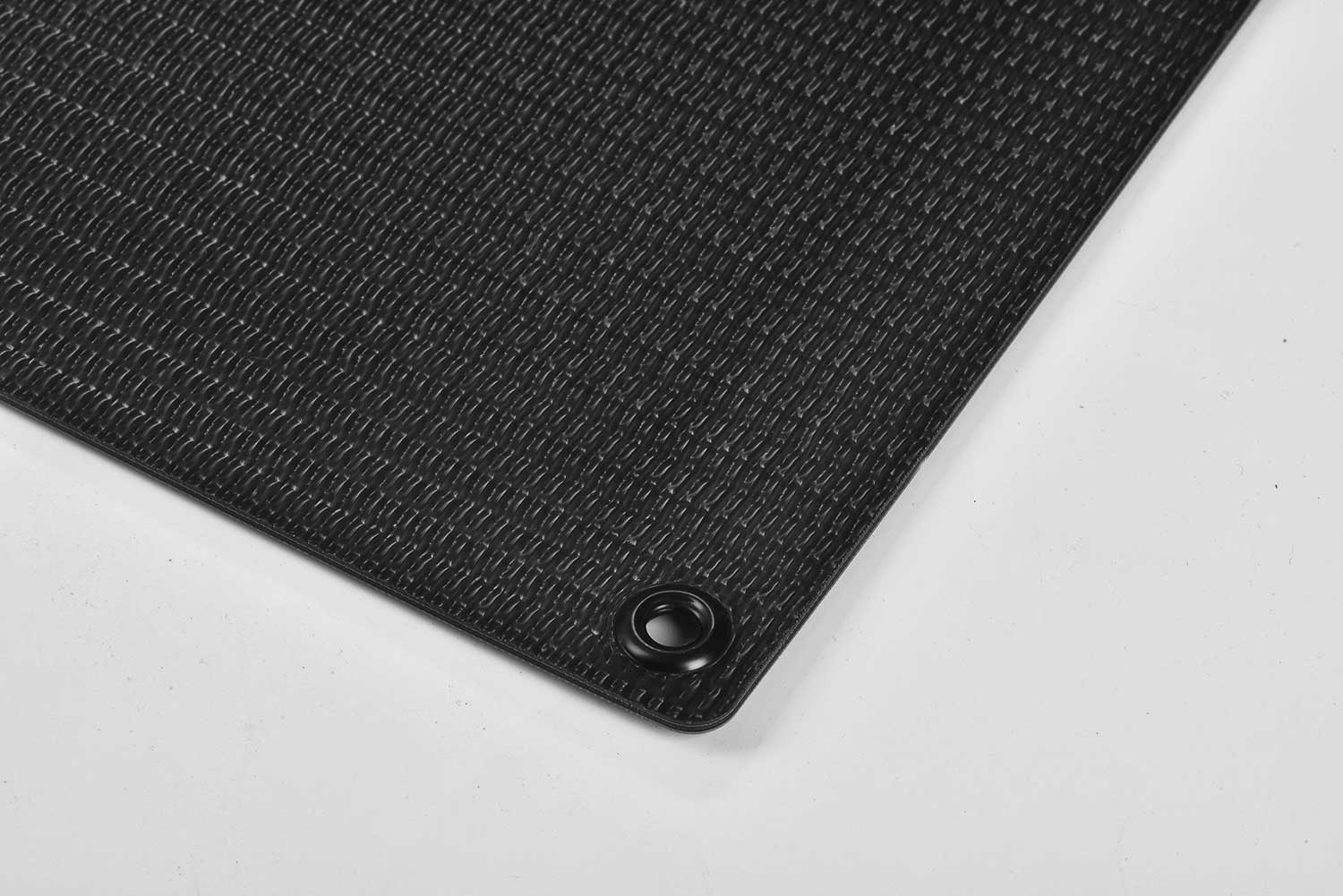
316 Stainless Steel Grommets
Built for demanding outdoor applications, our flexible solar panels use 316 stainless steel grommets for enhanced corrosion resistance and reliable mechanical mounting. They provide durable fixing points for RVs, camper vans, boats, yachts and off-grid installations, with customized positions and layouts available for OEM/ODM projects.
Outdoor Use and Construction
Bright Solar’s supplied product information describes an ETFE surface, a multilayer encapsulation structure, and design measures intended to address outdoor exposure and mechanical stress. It also describes crack-resistance features and an anti-hot-spot design approach. These statements are manufacturer-provided product descriptions; no independent test report or quantified service-life result was included in the supplied material.
The source material says the design considers UV exposure, rain, dust, temperature changes, vibration, and mechanical stress. Actual durability depends on installation, environment, maintenance, and the confirmed product configuration. Do not treat these descriptions as a substitute for a specified IP rating, warranty, or third-party certification.

How Does a 100W Flexible Solar Panel Work?
When sunlight reaches photovoltaic cells, the cells convert light into direct-current (DC) electricity. In a battery-based off-grid system, a compatible solar charge controller regulates the energy supplied to the battery. If AC power is required, an inverter converts DC electricity into alternating current. The US Department of Energy explains the role of inverters in PV systems and the role of batteries in storing solar electricity.
The 100W nameplate rating does not mean the panel produces 100W continuously or delivers a fixed amount of energy every day. Output changes with irradiance, cell temperature, shading, orientation, tilt, surface condition, wiring losses, controller performance, and battery or inverter losses. NREL notes that field conditions commonly differ from STC, affecting energy production.
For system design, match Vmp, Voc, Imp, and Isc with the controller, battery, wiring, connectors, and any inverter. Also check array voltage and current when panels are connected in series or parallel.
Applications of a 100W Flexible Solar Panel
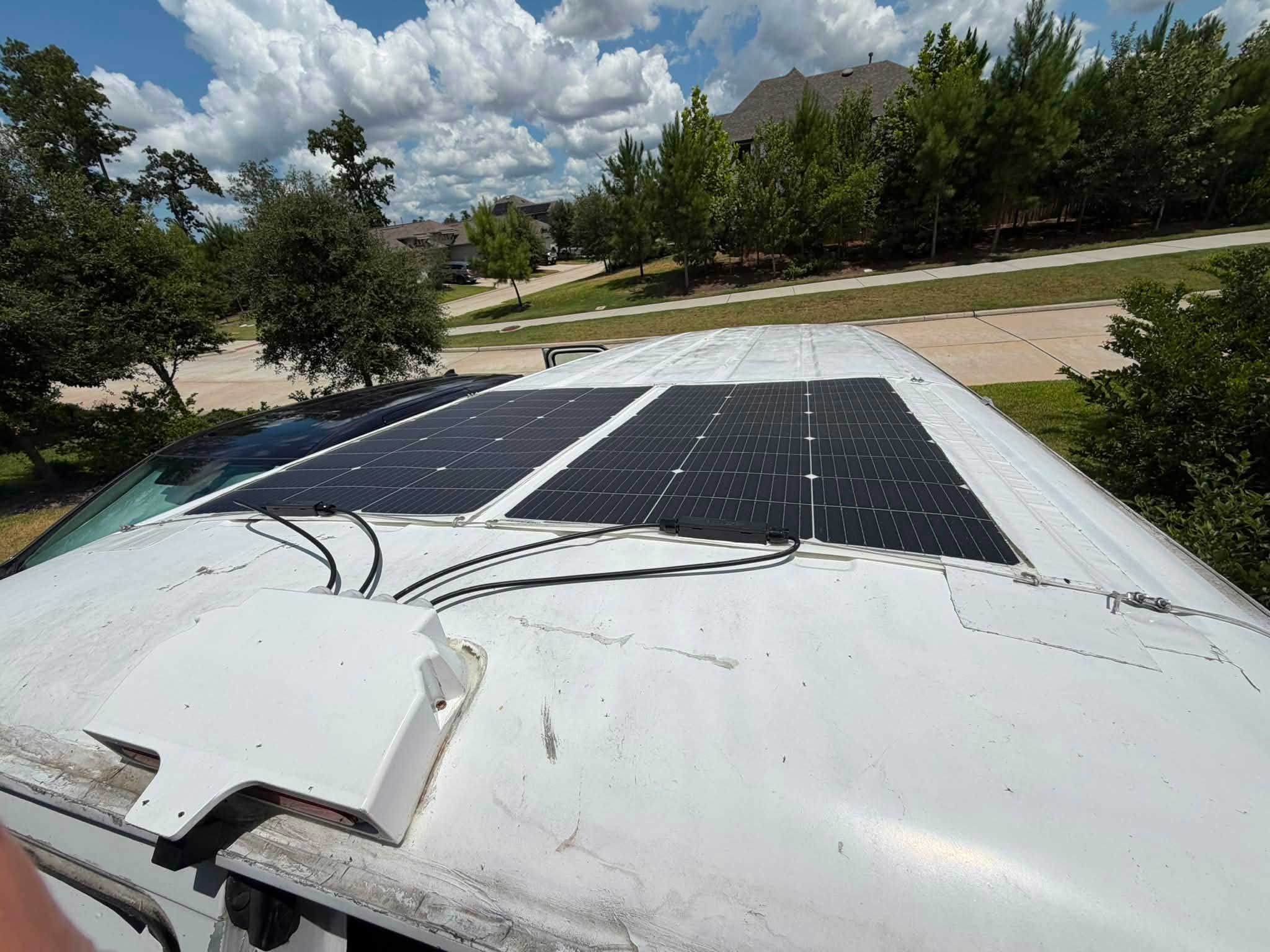
RV and Camper
RVs and camper vans often have limits on roof area, weight, and mounting geometry. At approximately 1.8 kg, the L Series 100W panel may suit some applications where a low-profile module is required. RV manufacturers, conversion companies, and system integrators can discuss dimensions, power, electrical configuration, and installation requirements with Bright Solar for a specific vehicle platform.
Marine and Boat
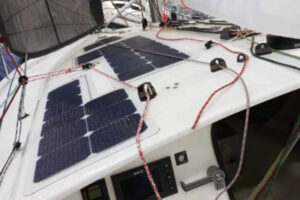
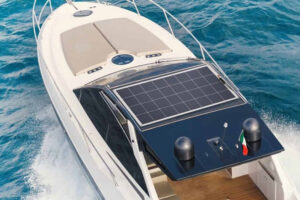
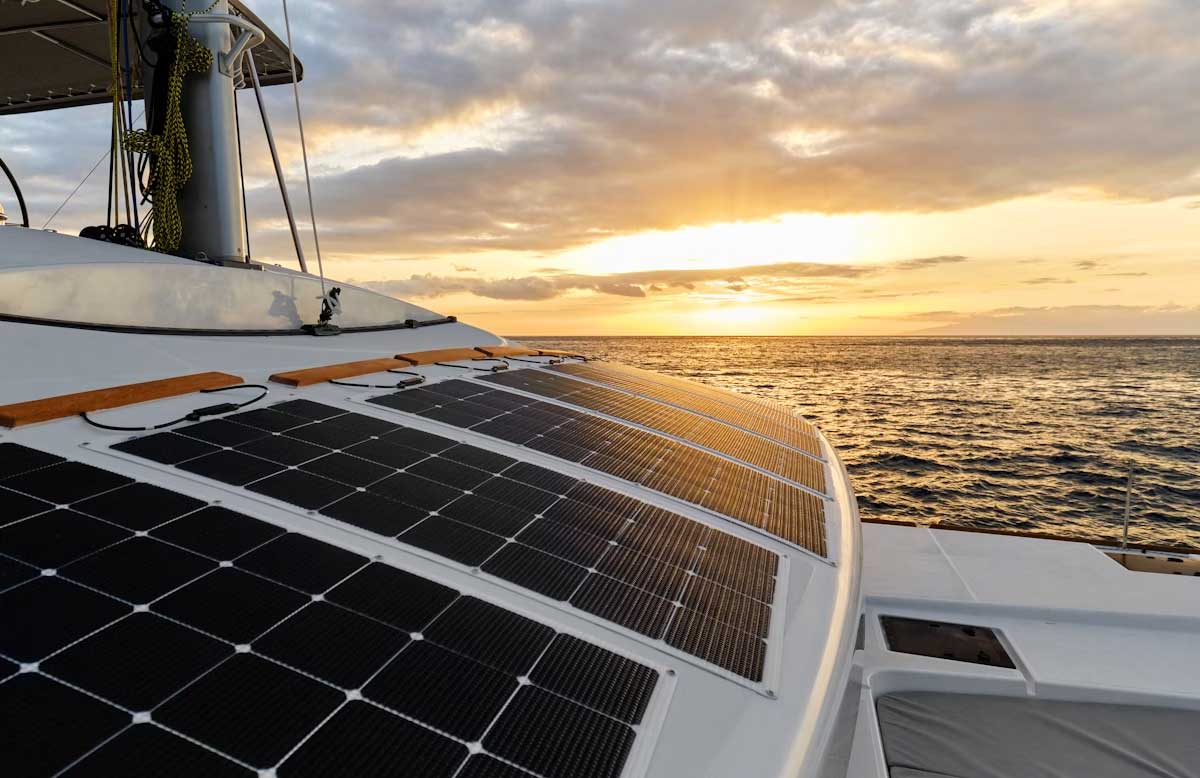
Selected boats may use flexible modules for auxiliary power where weight and available space matter. Marine selection must account for saltwater exposure, mounting location, mechanical loads, and the vessel’s operating conditions. Bright Solar identifies its H Series as the range intended specifically for boats, yachts, and marine gear, with construction directed toward marine environments. Confirm whether L Series or H Series is appropriate for each project rather than assuming the L Series suits every marine installation.
Off-Grid Solar Systems
A 100W module can be used as a small generation unit or combined with other modules to increase array capacity. Applications may include mobile equipment, small off-grid installations, and locations where grid access is limited. Bright Solar also offers flexible solar systems and solar system kits; system-level compatibility and configuration should be confirmed for the project.
Camping and Outdoor Power
The module may be used in camping, mobile power, outdoor equipment, small off-grid loads, and emergency-energy setups when paired with compatible balance-of-system equipment. A fixed-installation Flexible Solar Panels is not the same product category as a foldable or portable panel. Customers prioritizing folding and compact storage should review Bright Solar’s Portable Solar Panel and Folding Solar Panel ranges.
100W Flexible Solar Panel vs. Rigid Solar Panel
| Feature | 100W Flexible Solar Panel | 100W Rigid Solar Panel |
|---|---|---|
| Flexibility | Can suit some curved or irregular surfaces within the product’s limits | Generally intended for flat, fixed mounting surfaces |
| Weight | Bright Solar L Series 100W: approximately 1.8 kg | Often heavier; actual weight depends on glass, frame, and construction |
| Installation | May use suitable adhesive or VHB methods, subject to project validation | Typically uses brackets, clamps, or a mounting structure |
| Mounting surface | Useful for some curved surfaces and space-constrained installations | Usually suited to flat surfaces or standard mounting structures |
| Portability | Thin and lightweight; may suit mobile applications | Generally less convenient for frequent movement |
| Typical applications | RVs, campers, vans, selected marine, outdoor, and off-grid projects | Roofs, ground-mounted arrays, and fixed solar systems |
Neither format is universally preferable. Flexible modules may be relevant when weight, profile, or curved mounting geometry is a priority. Rigid modules may be suitable for flat, fixed installations with conventional mounting hardware. B2B selection should consider the site, structural requirements, system design, cost, and operating conditions.
How Much Power Can a 100W Flexible Solar Panel Produce?
The module’s rated peak power is 100W. STC is a defined rating condition, not a description of normal outdoor operation. NREL identifies typical PV rating conditions as 1,000 W/m² irradiance, AM1.5 spectrum, and a cell temperature of 25°C.
A 100W panel does not necessarily produce 100Wh in every hour, nor does it guarantee 1,000Wh per day. Energy depends on the available sunlight and system conditions.
A simple estimate before system losses is:
Daily energy (Wh) ≈ 100W × peak-sun-hours
For example, using four peak-sun-hours gives 100W × 4h = 400Wh before losses. This is an illustrative calculation, not a site-specific forecast. To estimate usable energy, account for shading, orientation, temperature, wiring, controller, battery, and inverter losses. For a real project, use location-specific solar-resource data and the actual system design.
How to Install a 100W Flexible Solar Panel
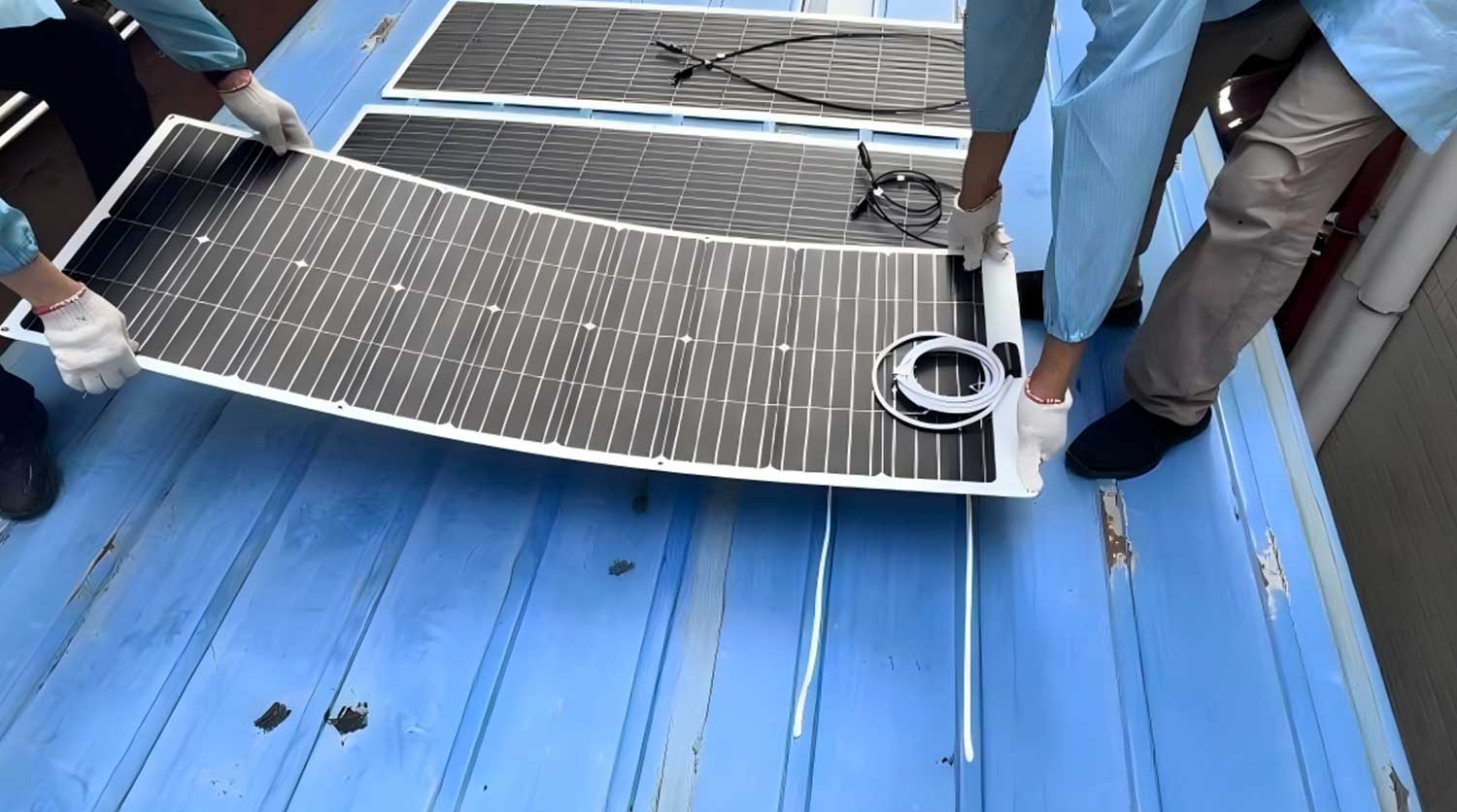
Installation depends on the module version, mounting surface, and project requirements. The following is a planning outline, not a substitute for the product’s installation instructions or qualified electrical work.
1. Choose a Suitable Surface
Select a clean, dry surface with suitable structural capacity. For a curved surface, verify that its curvature stays within the permitted bend range. Do not force the panel to conform to a surface beyond its design limits.
2. Position the Panel
Plan the location around sun exposure and avoid persistent shade from air conditioners, skylights, antennas, trees, or other equipment where possible. On an RV, account for roof openings, accessories, wiring routes, and usable area.
3. Secure the Panel
Choose a fixing method compatible with the surface and the project. Bright Solar lists industrial adhesive and VHB tape as L Series options, but adhesive type, surface preparation, and application procedure must be confirmed for the actual materials and environment.
4. Connect the Cables
Observe polarity and use the approved cable and connector configuration. Bright Solar lists optional PV cables with MC4 connectors or a two-core cable. Confirm conductor size, connector compatibility, routing, strain relief, and environmental suitability before energizing the system.
5. Connect the Charge Controller
For battery charging, select a controller compatible with the module’s electrical characteristics and the battery chemistry and voltage. For multiple modules, calculate series and parallel array voltage and current and verify the controller’s input limits.
6. Check System Output
After installation, inspect the mounting, cable routing, polarity, and connections, then check operation under suitable sunlight using appropriate procedures and instruments. Before an OEM project enters production, verify panel voltage and current, battery voltage, controller, cable specification, connector type, and installation method.
Why Choose Bright Solar’s 100W Flexible Solar Panel?
For B2B buyers, product selection also involves configuration support, quality processes, customization, and order planning. The following capabilities are described in the supplied Bright Solar material and should be confirmed against the requirements of each order.
Quality Control
Bright Solar’s product information states that L Series construction has undergone impact and vibration testing and is designed with bending, vibration, and mechanical stress in mind. Ask for the applicable test methods, reports, and acceptance criteria when these are required for a project.
Customization Options
Bright Solar supports L Series size customization. Buyers can review dimensions, available roof or mounting area, layout, and target power to determine whether a custom configuration is feasible.
OEM/ODM Support
Bright Solar can discuss product development and specification matching, including dimensions, electrical parameters, cell configuration, and project-specific requirements. Final capabilities depend on technical review and agreement.
Bulk Orders and Packaging
The product is positioned for brands, RV solar businesses, system integrators, distributors, and importers. Packaging and private-label requirements can be discussed for OEM/ODM projects; quantities, artwork, and packaging details must be confirmed in the order.
Technical Support
Bright Solar can assist with product selection based on application, available space, target power, system voltage, battery, and installation environment. Share the system design and operating conditions so that compatibility can be reviewed.
100W Flexible Solar Panel for OEM & Wholesale
Flexible Solar Panel OEM
Depending on project feasibility and agreement, OEM discussions may cover:
- Custom dimensions, power, and voltage
- Cable and connector configuration
- Logo, label, and model number
- Packaging and product documentation
MOQ and Bulk Production
The supplied information states that MOQ for customized products depends on specifications, customization scope, and production requirements; there is no single MOQ for every project. Standard and approved customized products may be produced in bulk, with capacity, lead time, and order conditions confirmed individually.
Custom Specifications
Potential discussion points include size, power, voltage, cell technology and layout, cable, connector, and junction-box position. Confirm which options apply to the selected product and obtain written approval of the final specification.
Logo and Packaging
OEM and private-label customers can discuss branding elements such as logo, label, model number, manual, and packaging. Final artwork, language, quantities, and packaging details should be approved before production.
Sample Orders
For a new or customized project, sample development and approval can be used before moving to bulk production. Confirm sample scope, evaluation criteria, and any changes required before approving mass production.
FAQ About 100W Flexible Solar Panel
How much power does a 100W flexible solar panel produce?
Its rated peak power is 100W under specified test conditions. Actual output varies with sunlight, temperature, shading, installation angle and direction, and system losses. A daily energy estimate requires peak-sun-hours and loss assumptions.
Can a 100W flexible solar panel charge a 12V battery?
It may be used in a 12V battery system when paired with a compatible charge controller and when the panel’s electrical characteristics are suitable. Confirm the battery requirements, controller limits, and full system configuration; wattage alone does not establish compatibility.
Can a 100W flexible solar panel be used on an RV?
Yes, it is an intended application for Bright Solar’s L Series. The listed panel weighs approximately 1.8 kg and has a thin flexible construction. Suitability depends on the roof material, curvature, available area, mounting method, shading, and electrical design.
Can a 100W flexible solar panel be installed on a curved surface?
It can be installed on some curved surfaces, provided the curve stays within the product’s permitted bending range. Bright Solar lists flexibility of up to 30% for the L Series; confirm what that figure means for the exact model and do not treat the panel as infinitely bendable or foldable.
Does the 100W rating mean 100W of output all day?
No. 100W is the nominal peak power rating under standard test conditions. Outdoor output changes with irradiance, cell temperature, shading, orientation, and system losses.
Can I connect several 100W panels together?
Multiple modules can be combined to increase array capacity, but the series or parallel configuration must be designed around array voltage and current limits, controller specifications, wiring, and battery-system requirements.
Conclusion
Bright Solar’s L Series 100W Flexible Solar Panel is a lightweight, low-profile option for selected RV, camper, mobile, outdoor, and off-grid installations. The supplied specifications list a 100W nominal peak rating, 20V Vmp, 5.00A Imp, 25.00V Voc, 5.32A Isc, 1.8kg weight, and support for custom sizes. Actual energy yield and suitability depend on site conditions, installation, and system compatibility. For OEM, ODM, or wholesale projects, confirm the exact cell configuration, approved mounting method, electrical limits, testing documentation, MOQ, and lead time with Bright Solar before placing an order.
Related recommendations
-

-
advantage of solar panel – Why More People Choose Bright Solar
281advantage of solar panel is clear: it cuts electricity bills, reduces carbon footprint and offers long-term clean power. Bright Solar explains how solar panels save money and protect the environment.
View details -
How a Simple 60W Flexible Solar Panel Solved Our Biggest Sailing Headache
299When our sailboat needed reliable power for Mediterranean cruising, our solution was simple: a Bright Solar 60W flexible solar panel paired with a 35W unit. See how this modest setup kept us sailing longer.
View details -
Project: Italy Marine 2018 – 200W*1pcs flexible Solar Panel
453Bright Solar completed an Italy Marine 2018 yacht project using a single 200W flexible Solar Panel. Discover how this lightweight marine solar solution delivers quiet, stable power on board while saving fuel and maintenance costs.
View details