How Much Are Solar Panels for My House?
How much are solar panels for my house? Most homeowners in 2026 can expect to spend between $15,000 and $30,000 before incentives for a professionally installed residential solar system. Panel-only pricing is usually $0.20–$0.50 per watt, while the final installed cost depends on roof size, electricity usage, local labor rates, equipment selection, and permitting requirements.
The first time I was asked this question wasn’t during a sales meeting—it happened while inspecting a suburban home whose owner had already received four quotations. Surprisingly, every installer measured the same roof, yet the highest proposal exceeded the lowest by nearly $13,000. That experience reinforced something I’ve continued to see throughout years of working with residential solar projects: homeowners aren’t simply buying panels—they’re investing in system design, engineering, installation quality, warranty support, and decades of energy production.
Rather than focusing only on sticker price, I recommend evaluating the complete lifetime value of the system.
What Determines How Much Solar Panels Cost for Your House?
Several factors influence the final investment. Two homes with identical roofs can receive noticeably different quotations simply because their annual electricity consumption or local permitting requirements differ.
The biggest cost drivers include:
| Cost Factor | Typical Impact |
|---|---|
| System size (kW) | Largest pricing factor |
| Electricity consumption | Determines required capacity |
| Roof orientation & shading | Influences panel quantity |
| Solar panel efficiency | Premium panels cost more but require fewer modules |
| Inverter type | String vs. microinverter pricing differs |
| Roof condition | Repairs before installation add cost |
| Labor & permitting | Varies significantly by region |
According to the U.S. Department of Energy, installation expenses, permitting, engineering, electrical work, and labor frequently represent a substantial share of the total residential solar investment rather than the solar modules themselves.
Sources:
- U.S. Department of Energy — https://www.energy.gov
- National Renewable Energy Laboratory (NREL) — https://www.nrel.gov
Typical Residential Solar System Costs by Home Size
From reviewing residential quotations across different markets, most homeowners fall within a relatively predictable range.
| Home Size | Recommended System | Estimated Installed Cost (Before Incentives) |
|---|---|---|
| Small home | 3–4 kW | $9,000–$15,000 |
| Average family home | 5–7 kW | $15,000–$24,000 |
| Large home | 8–10 kW | $24,000–$35,000+ |
These figures generally include:
- Solar panels
- Mounting hardware
- Inverter
- Wiring
- Monitoring system
- Professional installation
- Inspection and permitting
Federal incentives and local rebates may reduce the final out-of-pocket cost substantially depending on your location.
Industry references:
- Solar Energy Industries Association (SEIA)
- National Renewable Energy Laboratory (NREL)
How Much Does Each Part of the Solar System Cost?
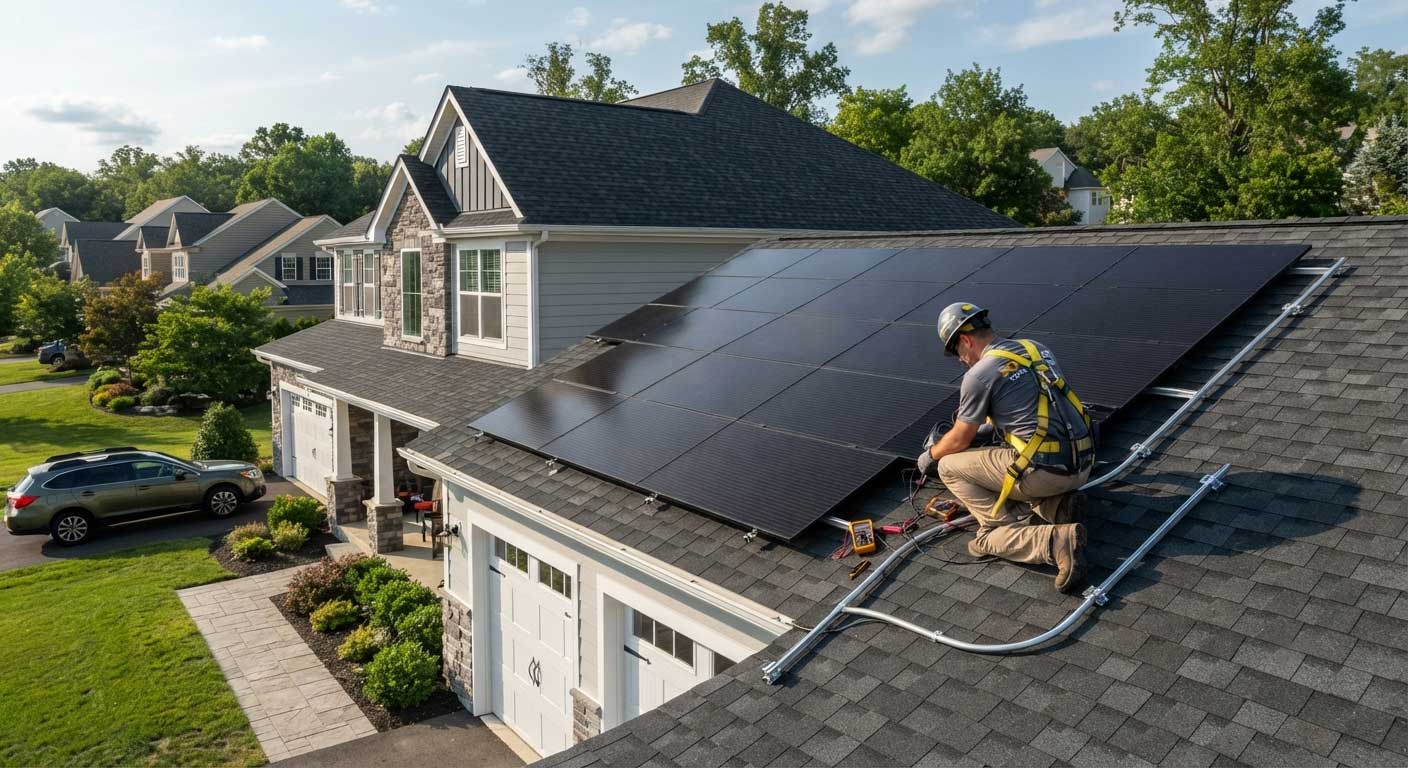
Many homeowners assume the solar panels account for most of the bill. In reality, they’re only one piece of the overall investment.
A typical residential project often breaks down approximately like this:
| Component | Share of Total Cost |
|---|---|
| Solar panels | 20–30% |
| Inverter | 10–15% |
| Mounting system | 8–12% |
| Electrical equipment | 10–15% |
| Labor | 25–35% |
| Design, permits & inspection | 10–15% |
This explains why choosing cheaper panels rarely cuts the project price dramatically. Installation quality, electrical workmanship, and system reliability have a much greater impact over the next 25 years than saving a few hundred dollars on modules.
From my experience reviewing residential installations, homeowners who focused exclusively on the lowest quotation often returned later asking why their monitoring system underperformed or why warranty claims became difficult. A well-designed system generally produces more electricity over its lifetime, making its true cost per kilowatt-hour significantly lower than an inexpensive installation with recurring issues.
How Can I Estimate the Cost of Solar Panels for My House?
A simple way to estimate your residential solar investment is to start with your electricity usage rather than your roof size.
Most homeowners begin by checking their annual electricity consumption from utility bills. A typical U.S. household uses around 10,500–11,000 kWh of electricity per year, according to the U.S. Energy Information Administration (EIA).
Source:
- U.S. Energy Information Administration (EIA) — https://www.eia.gov
For example:
| Annual Electricity Usage | Approximate Solar System Size | Estimated Panel Count (400W Panels) |
|---|---|---|
| 5,000 kWh/year | 3–4 kW | 8–10 panels |
| 10,000 kWh/year | 6–7 kW | 15–18 panels |
| 15,000 kWh/year | 9–10 kW | 23–25 panels |
The actual number depends on sunlight conditions, roof angle, shading, and the efficiency of the selected modules.
When helping homeowners evaluate solar options, I usually avoid starting with “How many panels can fit on your roof?” The better question is: How much energy does your home need throughout the year?
A smaller, highly efficient system can sometimes outperform a larger system installed on a poorly positioned roof.
Are Solar Panels Worth the Cost for a House?
Solar panels can be a worthwhile investment when the system is correctly sized and the property receives sufficient sunlight. The financial return mainly comes from reducing electricity bills, increasing energy independence, and protecting against future electricity price increases.
According to the National Renewable Energy Laboratory (NREL), solar photovoltaic modules are commonly designed for long service periods, with many manufacturers providing 25-year performance warranties.
Source:
- National Renewable Energy Laboratory (NREL) — https://www.nrel.gov
A typical residential solar system may provide benefits through:
- Lower monthly electricity expenses
- Protection from rising utility rates
- Increased home energy independence
- Potential improvement in property value
- Reduced carbon emissions
However, the payback period is not identical everywhere. A homeowner in Arizona with strong sunlight and high electricity rates may recover the investment faster than someone living in a region with lower electricity prices and frequent cloudy weather.
Ways to Reduce the Cost of Solar Panels for Your Home
The final price of a solar installation can often be improved without sacrificing quality.
1. Compare Complete System Quotes
Do not compare only the panel price. A reliable quotation should include:
- Solar module specifications
- Inverter brand and efficiency
- Installation method
- Warranty terms
- Expected annual production
A $2,000 cheaper quote may exclude important electrical upgrades or use lower-quality components.
2. Choose the Right Solar Panel Type
Different homes require different solutions.
For standard roofs, rigid monocrystalline panels are commonly selected. For lightweight structures, RV applications, curved surfaces, or unusual installations, flexible solar panels can provide additional options.
Bright Solar’s flexible solar solutions are designed for applications where traditional rigid modules may not be practical, including mobile homes, marine environments, and lightweight structures.
Why Choose Bright Solar for Residential Solar Solutions?
At Bright Solar, we focus on helping customers select solar products based on real installation conditions rather than simply recommending the highest wattage option.
Our experience with flexible solar technology has shown that every installation has different limitations:
- Roof weight restrictions
- Available installation space
- Weather exposure
- Transportation requirements
- Energy demand patterns
The right solar solution is not always the largest one. It is the system that matches the homeowner’s energy needs and installation environment.
Bright Solar Flexible Solar Panels use lightweight designs, durable surface materials, and advanced photovoltaic technology to support applications where traditional solar panels may not be suitable.
FAQ About How Much Are Solar Panels for My House?
How much are solar panels for my house on average?
Most homeowners spend approximately $15,000–$30,000 before incentives for a complete residential solar installation. The final price depends on system size, equipment quality, installation complexity, and location.
How many solar panels does my house need?
A typical home may require around 15–25 solar panels depending on electricity consumption, panel wattage, roof conditions, and local sunlight availability.
Does the size of my house affect solar panel costs?
Yes. Larger homes usually consume more electricity and require larger solar systems. However, electricity usage is a more accurate measurement than square footage alone.
Are flexible solar panels more expensive than traditional panels?
Flexible solar panels usually have a higher cost per watt because they use lightweight materials and specialized manufacturing processes. They are valuable for applications where weight, portability, or curved installation surfaces matter.
How long do residential solar panels last?
Most quality solar panels are designed to operate for 25 years or longer, with gradual efficiency reduction over time.
Can solar panels eliminate my electricity bill completely?
A properly designed system can significantly reduce electricity costs, but complete elimination depends on energy consumption, solar production, utility policies, and whether battery storage is included.
Should I buy more solar panels than I currently need?
Not always. Oversizing a system without considering future energy needs can increase upfront costs unnecessarily. A professional assessment helps balance current consumption and future expansion possibilities.
How Much Is A Solar Panel For House?
A single solar panel for a house usually costs between $100 and $500, depending on wattage, technology, and brand. However, a complete home solar system requires multiple panels, inverters, mounting equipment, and installation services.Learn more about “How Much Is A Solar Panel For House“
Conclusion: Estimating the Real Cost of Solar Panels for Your House
How much are solar panels for my house? The answer depends on your energy usage, location, roof conditions, and system design, but most residential installations fall between $15,000 and $30,000 before incentives.
The most important decision is not choosing the cheapest solar panel—it is choosing a system designed for reliable performance over decades.
After reviewing many residential solar projects, I have found that homeowners who understand their energy requirements before purchasing usually make better decisions. A solar investment should be measured by long-term electricity savings, durability, and system performance—not only by the first quotation they receive.
Bright Solar continues to develop practical solar solutions that help homeowners and businesses move toward cleaner and more independent energy systems.
The prev: How much are residential solar panels?The next: How Much Does It Cost for One Solar Panel?
Related recommendations
-

How effective are solar panels?
139How effective are solar panels? Discover solar energy benefits, power output, efficiency factors, and real-world performance insights from Bright Solar experts.
View details -
How to Clean Solar Light Panels?
199Learn how to clean solar light panels properly, remove dirt from garden solar lights, improve charging performance, and extend solar lighting lifespan.
View details -
How Solar Panel Made?
203How solar panel made? Learn how photovoltaic modules are manufactured from silicon cells to final testing with expert solar factory insights from Bright Solar.
View details -
how much silver in a solar panel?
186A modern crystalline-silicon solar panel typically contains about 3–8 grams of silver in a 400W module, depending mainly on cell technology and silver loadin...
View details