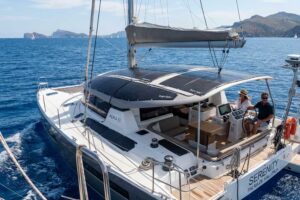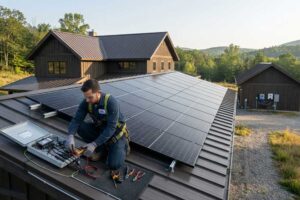
300 Watt Solar Panel: Practical Power for Homes, RVs, and Off-Grid Systems
A 300 watt solar panel is a versatile photovoltaic module designed for residential, RV, marine, and off-grid energy systems. Under normal sunlight conditions, a single 300W panel typically produces around 1.2–1.8 kWh of electricity per day, depending on weather, installation angle, and temperature.
That sounds straightforward. In practice, solar performance is rarely as clean as specification sheets suggest.
I’ve tested 300W panels on camper vans, workshop roofs, agricultural sheds, and backup battery systems over the last several years. Some delivered stable output for years. Others looked impressive in catalogs but struggled once heat, dust, or partial shade entered the picture.
That’s the thing about solar equipment: the real test starts after installation.
What Is a 300 Watt Solar Panel?
A 300 watt solar panel is a photovoltaic module capable of producing up to 300 watts of direct current electricity under Standard Test Conditions (STC).
Most modern 300W panels use:
- monocrystalline solar cells
- half-cut cell technology
- tempered low-iron glass
- aluminum alloy frames
- weather-resistant junction boxes
Typical applications include:
- RV and camper systems
- off-grid cabins
- residential rooftops
- marine battery charging
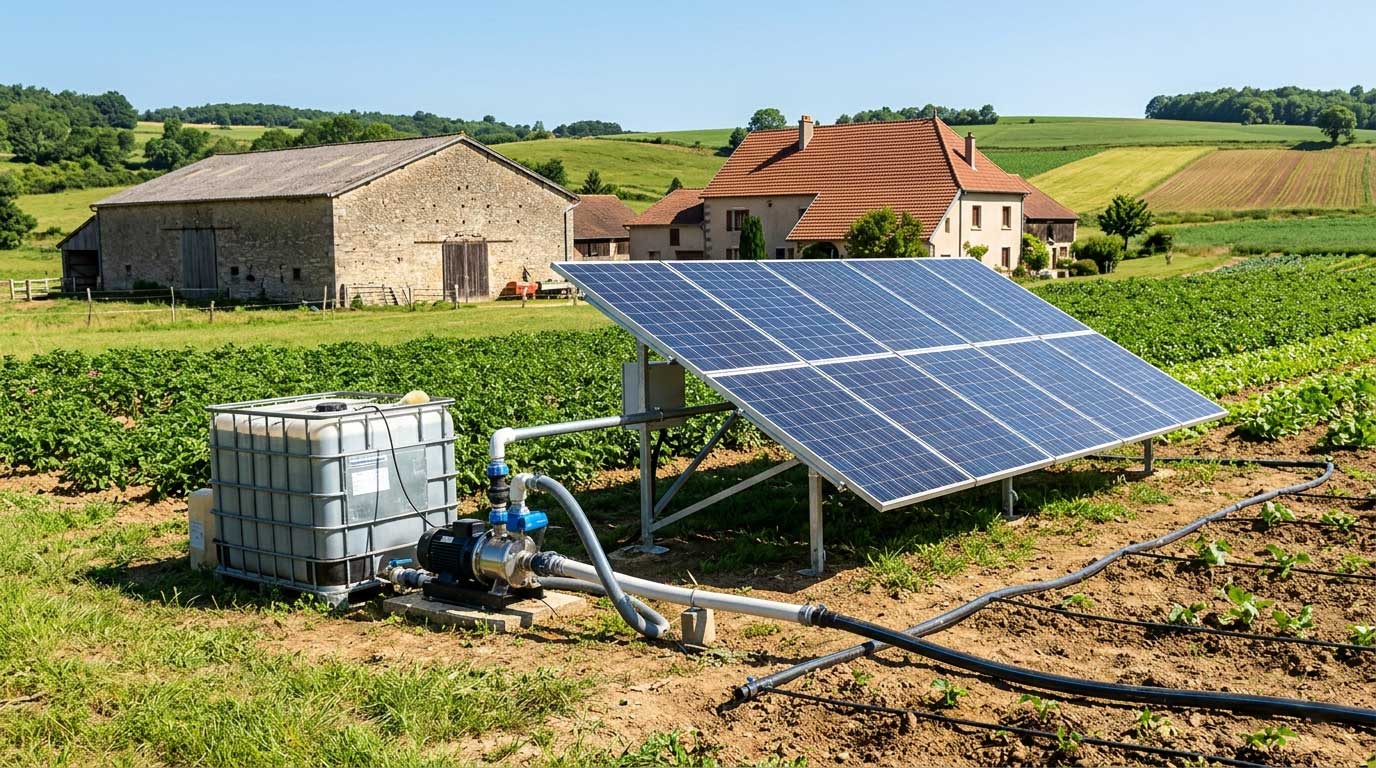
- agricultural power systems
According to the National Renewable Energy Laboratory (NREL), improvements in monocrystalline cell efficiency have significantly increased solar energy density over the last decade.
That’s one reason 300W panels remain popular despite the rise of larger modules.
Why 300W Panels Still Make Sense
Larger panels get attention online.
But many installers still prefer 300 watt solar panel systems for smaller or flexible projects.
Why?
Because they balance:
- manageable size
- easier handling
- good efficiency
- lower structural load
- broad compatibility with existing systems
One RV installer I worked with described 300W panels as “the point where power becomes practical without becoming annoying.”
That was probably the most accurate product summary of the year.
Real Daily Output: What to Expect
Laboratory ratings assume:
- perfect sunlight
- ideal temperature
- zero shading
- clean panel surface
- optimal installation angle
Real conditions are rarely ideal.
Typical daily production from one 300 watt solar panel:
| Environment | Estimated Daily Output |
|---|---|
| Sunny desert climate | 1.6–1.9 kWh |
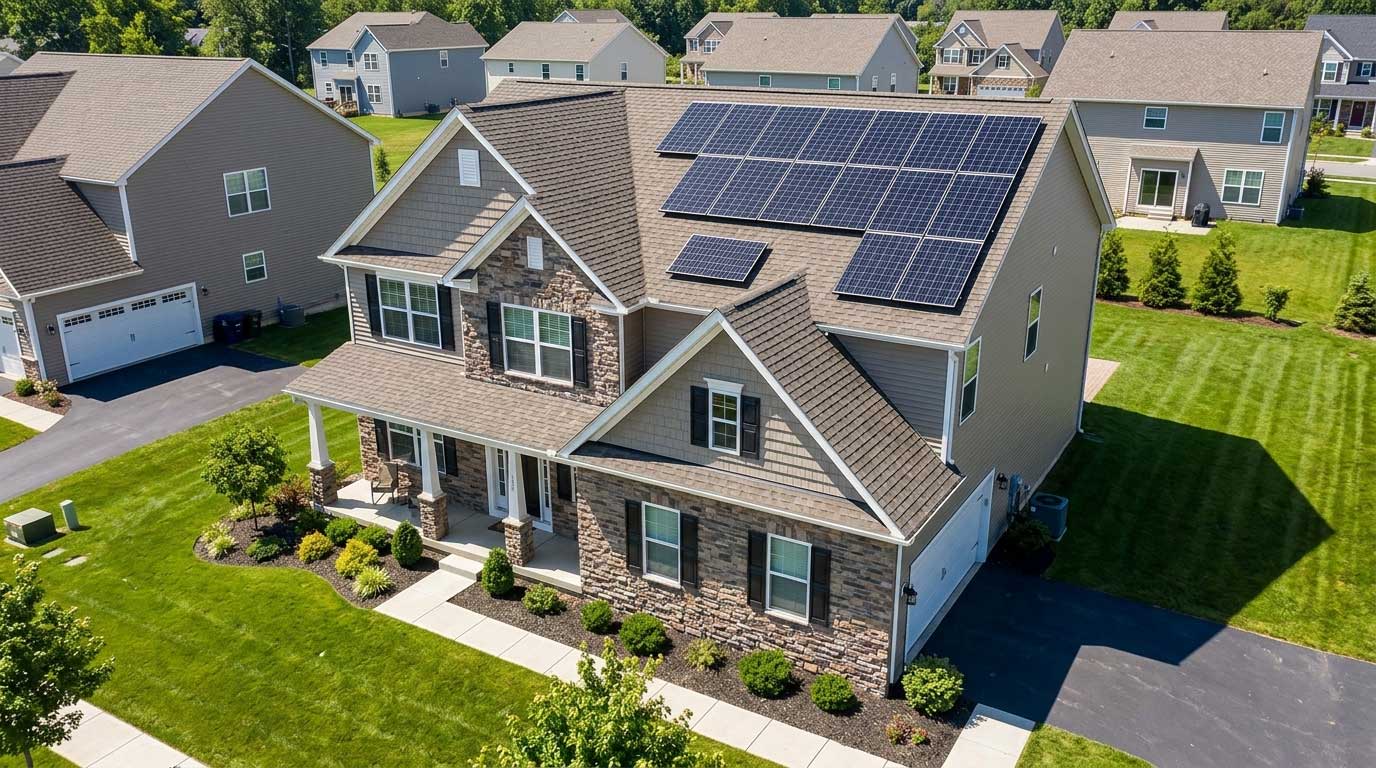
| Residential rooftop | 1.3–1.7 kWh |
| Coastal cloudy region | 1.0–1.4 kWh |
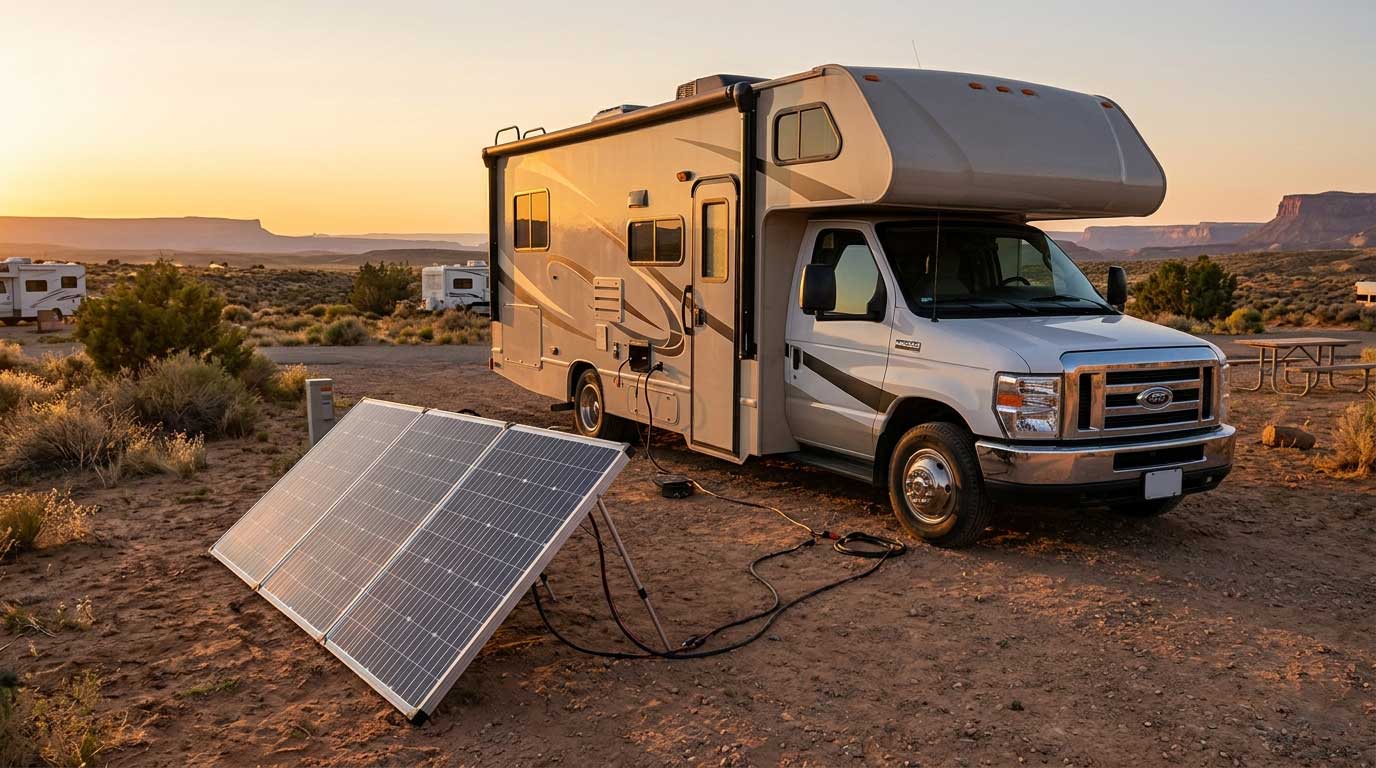
| Portable RV setup | 0.9–1.5 kWh |
Heat matters more than many buyers expect.
During summer field testing on a black camper roof, panel surface temperature exceeded 60°C by early afternoon. Output dropped noticeably despite excellent sunlight.
Solar panels love sunlight. They dislike excessive heat.
Key Features That Actually Matter
1. Cell Technology
Modern monocrystalline 300 watt solar panel products often use:
- PERC cells
- half-cut architecture
- multi-busbar design
These technologies help improve:
- efficiency
- low-light performance
- heat distribution
- long-term reliability
2. Temperature Coefficient
This specification quietly affects long-term performance.
A lower temperature coefficient means better efficiency in hot weather.
For example:
- -0.34%/°C performs better than
- -0.42%/°C in high-temperature environments
In warm climates, that difference becomes meaningful over years.
3. Frame Strength
Panels spend decades outdoors.
Weak frames eventually show problems:
- micro-vibration stress
- edge pressure on glass
- mounting distortion
- transport damage risk
I once inspected a low-cost installation where multiple frames had slight warping after heavy snow loads. Output loss followed gradually.
The frame matters more than many spec sheets suggest.
4. Waterproof Connectors
Outdoor solar systems fail surprisingly often at connectors.
Look for:
- UV-resistant cables
- waterproof MC4 connectors
- sealed junction boxes
One poor connection can reduce production across the entire system.
Understanding 300W Solar Panel Specifications and Dimensions
300 Watt Solar Panel Specifications
When buyers compare solar products, the first thing they usually notice is wattage. In reality, 300 watt solar panel specifications reveal much more about long-term performance than the large number printed on the front label.
A typical 300W module may include:
- Maximum Power (Pmax): 300W
- Open Circuit Voltage (Voc): 38V–42V
- Maximum Power Voltage (Vmp): 31V–35V
- Short Circuit Current (Isc): 9A–11A
- Module Efficiency: 18%–22%
Over the years, I have seen projects fail not because the panels were defective, but because installers ignored electrical specifications during system design. Bright Solar always recommends evaluating voltage compatibility, temperature coefficients, and operating current before making purchasing decisions.
300W PV Panel
The term 300W PV panel is commonly used in commercial quotations, engineering drawings, and distributor catalogs. PV stands for photovoltaic, meaning the panel converts sunlight directly into electricity through semiconductor solar cells.
A 300W PV panel remains one of the most practical sizes available for small and medium-scale solar systems. It offers enough output for battery charging, RV installations, and residential expansion projects while remaining manageable during transportation and installation.
In one farm project I visited, technicians could manually position 300W PV panels without specialized lifting equipment. Larger modules generated more power, but handling them became significantly more difficult in windy conditions.
300W PV Module
Although many people use the terms interchangeably, engineers often prefer the phrase 300W PV module in technical documentation. The term refers to the complete photovoltaic assembly, including solar cells, glass, frame, junction box, and wiring components.
Modern 300W PV module designs frequently incorporate:
- Monocrystalline cell technology
- Half-cut cell layouts
- Multi-busbar architecture
- Anti-reflective glass coatings
These improvements help increase energy production while reducing internal resistance and heat buildup. Bright Solar continues to focus on module durability because long-term field performance depends on the complete structure, not only cell efficiency.
300 Watt Solar Panel Size
One of the most overlooked planning factors is 300 watt solar panel size. Before purchasing panels, installers should confirm whether sufficient mounting space is available.
Most modern 300W monocrystalline panels measure approximately:
- Length: 1.6–1.8 meters (63–71 inches)
- Width: 0.9–1.1 meters (35–43 inches)
- Thickness: 30–40 mm
- Weight: 17–22 kg
Actual dimensions vary by manufacturer and cell configuration.
I have encountered several RV owners who selected panels based solely on power ratings, only to discover roof vents, air-conditioning units, or antennas reduced available installation space. Measuring first often prevents expensive redesigns later.
For Bright Solar customers, panel dimensions are reviewed alongside power requirements to ensure the system fits both the energy demand and the available installation area.
Common Uses for 300W Solar Panels
| Application | Why 300W Panels Work Well |
|---|---|
| RV Systems | Good balance of power and portability |
| Cabins | Efficient battery charging |
| Marine Systems | Moderate weight for boats |
| Residential Roofs | Flexible array sizing |
| Agricultural Equipment | Reliable daytime energy |
Portable vs Fixed 300W Systems
Portable 300 Watt Solar Panel Systems
Best for:
- camping
- RV travel
- emergency backup
- temporary outdoor work
Advantages:
- mobility
- quick deployment
- flexible positioning
Limitations:
- more physical wear
- lower long-term efficiency
Fixed Roof Installations
Best for:
- homes
- sheds
- workshops
- farms
Advantages:
- stable output
- optimized tilt angles
- better airflow management
Limitations:
- permanent installation work
- roof compatibility requirements
Common Mistakes Buyers Make
- Choosing based only on wattage
- Ignoring partial shade
- Poor battery sizing
- Weak mounting hardware
- Undersized cables
- No airflow behind panels
- Buying cheapest inverter available
Most solar frustrations are system problems—not panel problems.
Why Bright Solar Focuses on Real-World Durability
Bright Solar designs products for practical outdoor environments rather than ideal laboratory conditions.
Customers often prioritize:
- stable heat performance
- reinforced aluminum frames
- weather-resistant connectors
- high-efficiency monocrystalline cells
- compatibility with lithium battery systems
Because outdoor equipment should still perform years later—not only during initial installation.
FAQ – 300 Watt Solar Panel
How much electricity does a 300 watt solar panel produce daily?
Typically around 1.2–1.8 kWh per day under good sunlight conditions.
Can a 300W panel run a refrigerator?
Yes, with proper battery storage and inverter sizing.
Are 300W solar panels good for RV systems?
Yes. They offer strong charging capability while remaining reasonably portable.
How many 300W panels power a house?
Most homes require multiple panels depending on electricity usage and local climate.
Final Thoughts from Real Installations
When buyers ask whether a 300 watt solar panel is enough, the answer always depends on expectations.
Enough for:
- RV travel? Usually yes.
- Cabin lighting and batteries? Often yes.
- Full residential independence? Probably not alone.
Solar systems are never just about panel size.
They depend on:
- battery capacity
- inverter quality
- shading control
- installation angle
- cable efficiency
- local climate
The strongest systems are balanced systems.
And for many practical installations, the right 300 watt solar panel still delivers one of the best combinations of flexibility, efficiency, and manageable size available today.
Related recommendations
-

73 MW Photovoltaic Project in California Now Online in Tulare County
323he 73 MW photovoltaic project in California, known as the Luciana solar project in Tulare County, has entered commercial operation. Built near Ducor, CA, it supplies clean power for over 20,000 homes, supports local jobs, and advances California’s...
View details -
Flexible solar panel boat: Lightweight Marine Solar Solution for Modern Vessels
230Discover flexible solar panel boat solutions from Bright Solar. Learn how lightweight marine solar panels improve boat energy efficiency, installation flexibility, and off-grid performance.
View details -
Thin Film Flexible Solar Panel: Lightweight Solar Solutions for Modern Applications
161Discover thin film flexible solar panel technology for RV, marine and off-grid applications. Learn benefits, performance, installation tips and real project insights.
View details -
Solar Panel in Series: How to Wire Panels for Higher Voltage
377Learn how solar panel in series connections increase voltage, size strings safely, and match MPPT controllers. Practical wiring guidance for RV and off-grid solar.
View details